

A Sudanese court has sentenced Rapid Support Forces (RSF) commander Mohamed Hamdan Dagalo, widely known as Hemedti, to death in absentia in connection with the killing of former West Darfur Governor Khamis Abdallah Abakar during the early months of Sudan’s civil war.
The Anti-Terrorism and Crimes Against the State Court in Port Sudan handed down the ruling on Sunday, July 12, 2026, according to Sudanese judicial authorities and international media reports.
Hemedti, one of the two main figures at the centre of Sudan’s devastating conflict, was not present in court and remains outside the custody of authorities aligned with the Sudanese Armed Forces (SAF). The in-absentia ruling means the sentence cannot be immediately enforced against him. His brother and RSF deputy commander, Abdel Rahim Hamdan Dagalo, was among other defendants who also received death sentences in the case.
The proceedings centred on the killing of Khamis Abdallah Abakar, the governor of West Darfur, in June 2023. Abakar was killed shortly after publicly accusing the RSF and allied forces of committing atrocities in El Geneina, the capital of West Darfur.
Video footage that circulated at the time showed Abakar in the custody of armed men shortly before his death. The RSF denied responsibility for the killing and instead blamed what it described as “outlaws” involved in the fighting.
The United Nations condemned the killing and called for those responsible to be held accountable. Then-UN human rights chief Volker Türk said he was “appalled by the killing” of Abakar and called for a prompt investigation.
The death sentence comes more than three years after fighting erupted between the Sudanese Armed Forces, led by General Abdel Fattah al-Burhan, and Hemedti’s RSF in April 2023.
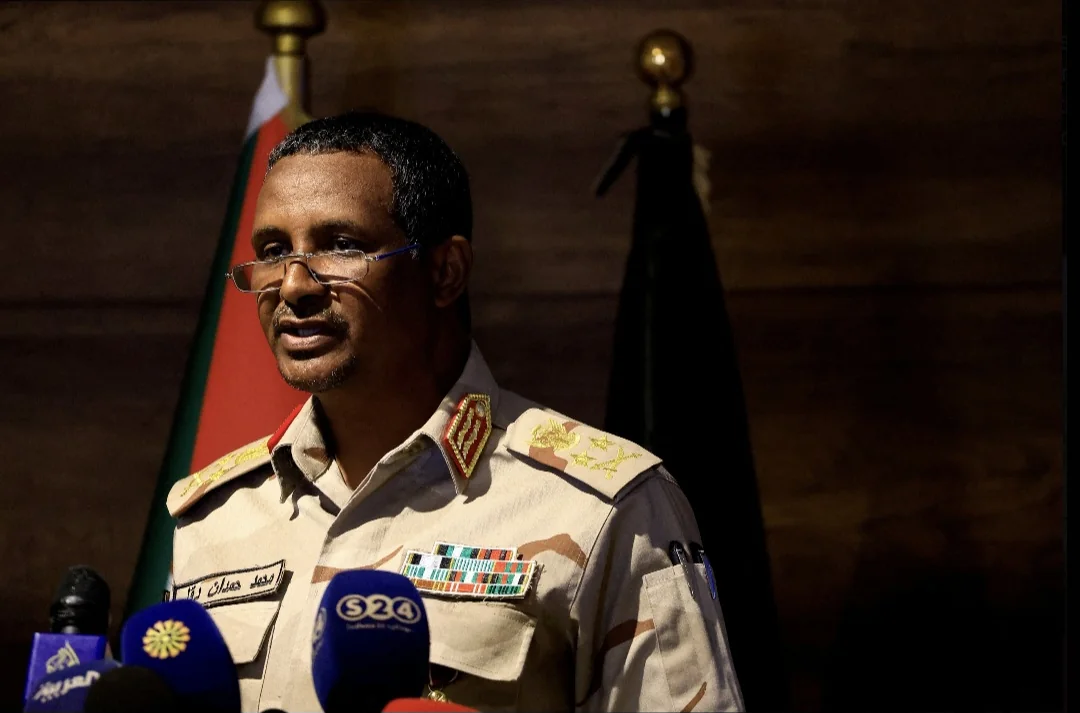
The conflict followed a power struggle between the two military leaders, who had previously worked together after the overthrow of longtime President Omar al-Bashir in 2019 and during the military takeover of October 2021. Tensions later escalated over plans to integrate the RSF into the regular army as part of a proposed transition towards civilian government.
Open warfare broke out in Khartoum on April 15, 2023, before spreading to other parts of the country, including Darfur. The war has since created one of the world’s most severe humanitarian crises, killing tens of thousands of people, displacing millions and leaving large parts of Sudan facing acute food insecurity. Both sides have faced accusations of serious violations during the conflict.
The RSF and allied militias have faced allegations of mass killings, sexual violence and other abuses in Darfur, particularly against members of the non-Arab Masalit community.
In January 2025, the United States determined that members of the RSF and allied militias had committed genocide in Sudan and imposed sanctions on Hemedti. The RSF has previously rejected accusations that it systematically targeted civilians and has said individuals responsible for abuses should be held accountable.
International investigations into atrocities committed during the Sudan conflict are continuing. The International Criminal Court (ICC), which has jurisdiction over crimes committed in Darfur following a 2005 referral by the United Nations Security Council, has continued investigating alleged war crimes and crimes against humanity in the region.
In July 2026, ICC Deputy Prosecutor Nazhat Shameem Khan told the UN Security Council that investigators had made significant progress in tracing responsibility for atrocities committed in Darfur.
“The evidence is increasingly pointing to higher levels of leadership,” she said, according to Reuters. The ICC statement did not publicly identify Hemedti as a suspect in a specific case, and the proceedings in Port Sudan are separate from the court’s investigations in The Hague.
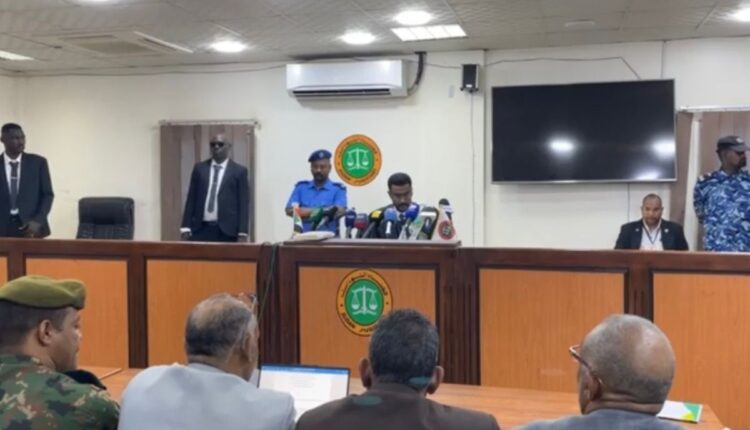
Hemedti’s absence from the proceedings is a significant part of the ruling. A sentence issued in absentia is delivered when an accused person is not present before the court. Hemedti remains a central figure in the ongoing war and is not in the custody of the authorities that prosecuted the case.
The ruling therefore represents a judicial decision by a Sudanese court but does not mean the RSF commander faces immediate execution.
The RSF has also established political and administrative structures in areas under its influence as the conflict has increasingly divided Sudan between territories controlled by rival forces. The death sentence is nevertheless a significant legal development involving one of the country’s most powerful military figures.
Hemedti rose to prominence through armed groups operating in Darfur before becoming the commander of the Rapid Support Forces. The RSF was formally established in 2013 and later incorporated into Sudan’s state security structure. Hemedti subsequently became one of Sudan’s most influential figures, particularly after the fall of Omar al-Bashir in 2019.
He served as deputy chairman of Sudan’s Sovereign Council, with army chief Abdel Fattah al-Burhan serving as its chairman, before relations between the two deteriorated and eventually descended into open warfare.
The July 12 ruling marks a major court judgment against the RSF commander since the current conflict began. However, with Hemedti still outside the custody of the Sudanese authorities behind the prosecution, the immediate practical effect of the death sentence remains limited.
The ruling comes as Sudan’s war continues, with efforts to secure a lasting ceasefire repeatedly failing and millions of civilians still dependent on humanitarian assistance. The broader question of accountability for atrocities committed during the conflict also remains unresolved, with domestic proceedings and international investigations continuing separately.