

Somalia’s Second Deputy Prime Minister, Jibriil Cabdirashiid Xaaji, has formally surrendered his Kenyan passport and Kenyan national identity card, complying with a directive issued by President Hassan Sheikh Mohamud requiring Cabinet members holding foreign citizenship to relinquish it or vacate their positions.
The development marks the latest step in Somalia’s efforts to enforce a policy requiring senior government officials to serve exclusively as Somali citizens while in office.
Cabdirashiid confirmed that he had handed over the Kenyan travel and identification documents to the relevant Somali authorities, saying he was acting in accordance with the President’s directive. He also urged other public officials affected by the order to comply.
“I have surrendered my Kenyan passport and Kenyan national identity card in compliance with the directive issued by the President,” Cabdirashiid said in a public statement.
President Hassan Sheikh Mohamud issued the directive after concerns emerged over senior government officials holding citizenship or official documentation from other countries. The order requires ministers with foreign nationality to either renounce it or resign from the Cabinet, a move the Somali government says is intended to strengthen public confidence in state institutions and eliminate questions over divided allegiance among senior office holders.
Cabdirashiid’s decision follows a diplomatic incident in June 2026, when he was denied entry into Kenya through Jomo Kenyatta International Airport (JKIA) and returned to Mogadishu.
According to Kenyan authorities, the Deputy Prime Minister entered Kenya using a valid Somali diplomatic passport and visa but was questioned over an alleged Kenyan passport believed to have been fraudulently acquired. Immigration officials detained him at the airport before placing him on a return flight to Somalia.
At the time, the Directorate of Criminal Investigations (DCI) said the Kenyan passport linked to Cabdirashiid was under investigation.
“The passport is the subject of ongoing investigations regarding its acquisition,” the DCI said following the incident.
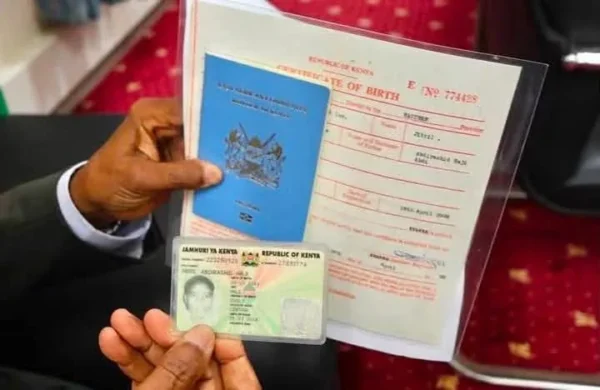
Cabdirashiid had maintained that he would only surrender the passport before a court of law, a position that contributed to his deportation after Kenyan authorities declined to admit him into the country.
The incident briefly heightened diplomatic attention between Kenya and Somalia, although both governments subsequently continued bilateral engagements on regional security and trade matters.
Under Somalia’s Provisional Constitution, dual citizenship is generally permitted. However, the President’s directive establishes an administrative requirement for serving Cabinet ministers, requiring them to hold only Somali citizenship while occupying executive office.
Political analysts say the directive reflects the Somali government’s attempt to reinforce accountability within the executive by ensuring ministers demonstrate exclusive allegiance to the country during their tenure.
It remains unclear how many other ministers or senior government officials are affected by the directive or the timeline within which compliance is expected. Cabdirashiid is among the first senior officials to publicly confirm that he has complied with the order.