

President William Ruto has signed into law two tax bills allowing the retention of reduced Value Added Tax (VAT) on petroleum products for 90 days, and making changes to the tax laws governing construction materials and Kenya Revenue Authority (KRA).
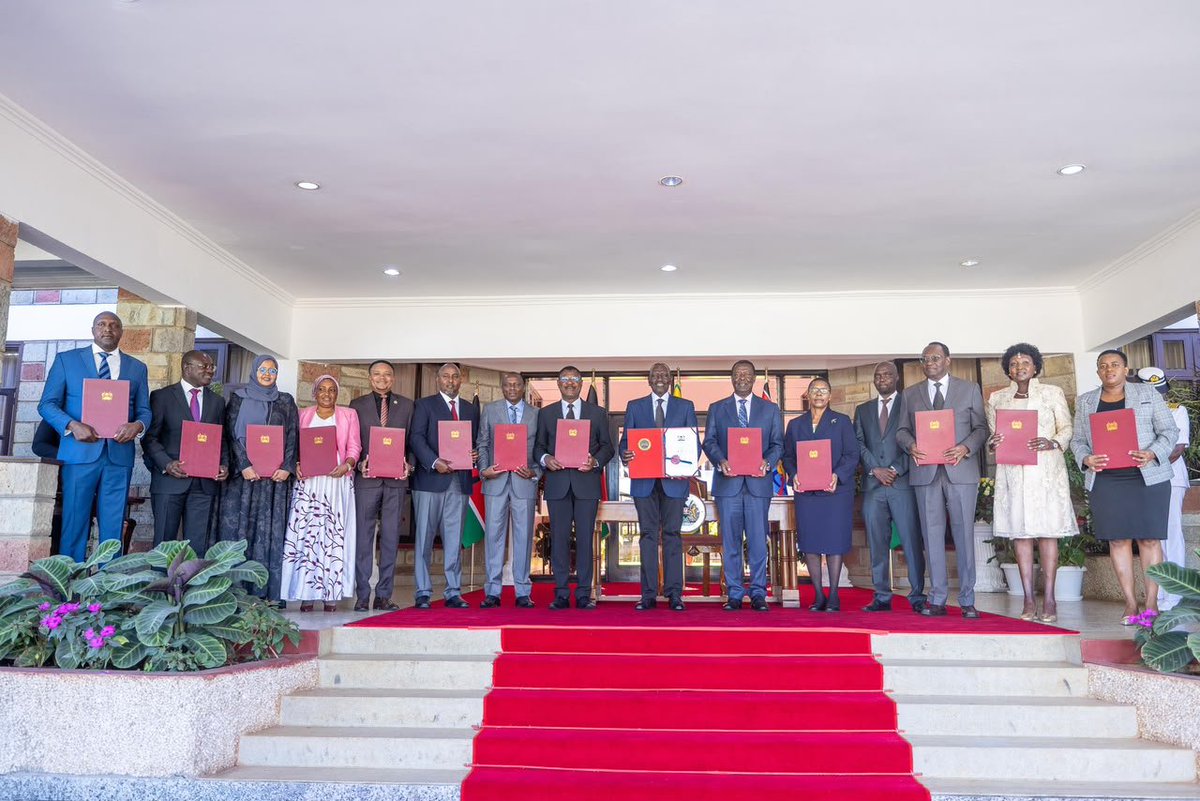
President William Ruto at Eldoret State Lodge in Uasin Gishu County on Friday, October 16 assented to the Tax Laws (Amendment) Bill, 2026, and Kenya Revenue Authority (Amendment) Bill, 2026.
The fuel tax bill maintains eight percent VAT rate on petrol, down from 16 per cent, after the relief measure expires on October 14. The National Assembly said the extension would cushion local consumers from the rising cost of fuel occasioned by the Russia-Ukraine war.
In its explanatory note, the National Assembly said the tax relief measure would “continue to give reprieve to the citizens” by cushioning households from the high cost of living and the resulting impact on the price of goods and services.
The National Treasury can extend the reduced tax rate for another 90 days by publishing a notice in the Kenya Gazette. The amended Tax Laws will see a change in the excise duty regime on construction materials and the tax laws that govern the operations of KRA.
Among the amendments, the tax charged on tiles will be based on size as opposed to weight since most are sold based on their surface area. The tax laws also lowers the excise duty on certain sanitary wares including sink, wash basin, bath and toilet pan from Ksh50 per kg to Ksh30 per kg.
The amendments will ease the tax burden on certain glass wares imported from East African Community (EAC) Partner States.
The National Assembly stated that the excise duties amendments would ease the burden of tax on public and private sector developers of public housing and private residential properties. The Kenya Revenue Authority (Amendment) Act, 2026 makes changes to the composition and finances of the tax collecting agency.
The law will see the Managing Director of Kenya Ports Authority (KPA) seat in KRA’s board and enhance collaboration between the agencies on matters pertaining to clearance of imports and tax collection. The amendment also provides funding for KRA based on revenue projection, a provision which will see the tax agency get at least two percent of the revenue it collects in any given financial year as a guaranteed income.
It also provides incentive to the agency based on a percentage of the collected taxes paid to local government, county governments and parastatals, as a reward for every quarter they exceed the projected revenue target.
The amendments to the KRA Bill are aimed at revitalizing the agency and not increasing tax rates, according to the National Assembly. The Tax Laws (Amendment) Bill was sponsored by National Assembly Majority Leader Kimani Ichung’wah and was introduced in Parliament on October 8 before being passed with amendments on October 14 and forwarded to the President for assent.
The reduced eight percent VAT rate on fuel is a temporary relief measure, according to the bill, and its extension will be determined by a notice published in the Kenya Gazette by the National Treasury Cabinet Secretary.