

The murder trial over the death of teacher and blogger Albert Omondi Ojwang has formally begun at the High Court, with prosecutors outlining what they describe as a planned killing while the 31-year-old was in police custody and an alleged effort to conceal the circumstances surrounding his death.
In opening submissions, the Office of the Director of Public Prosecutions (ODPP) told the court that it intends to present evidence showing that Ojwang was assaulted while detained at Nairobi Central Police Station before efforts were made to interfere with potential evidence. Former Nairobi Central Police Station Officer Commanding Station (OCS) Samson Talaam and five co-accused have denied the murder charges against them.
State prosecutors said their case will rely on testimony from Ojwang’s relatives, police officers involved in his arrest, forensic experts and medical witnesses. According to the prosecution, the evidence will seek to demonstrate that Ojwang was in good health at the time of his arrest and that the injuries documented during the post-mortem examination were inconsistent with the initial police account that he died after hitting his head against a cell wall.
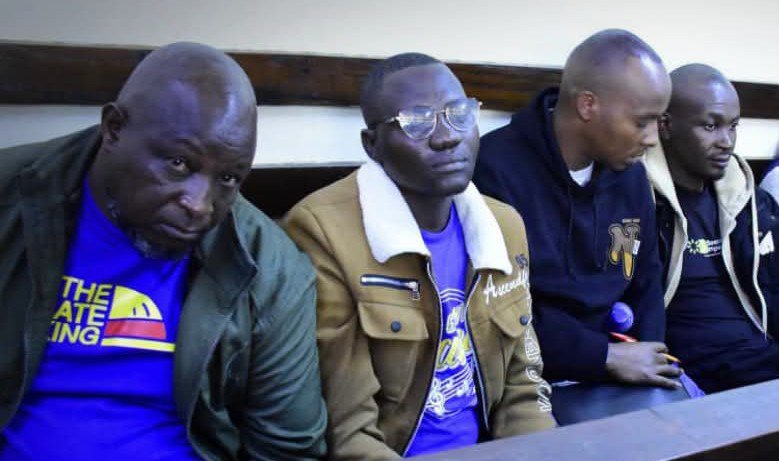
Addressing the court during the opening of the trial, the prosecution maintained that the evidence would show the death was not accidental.
“The prosecution shall demonstrate that this was a planned killing and that there were deliberate attempts to conceal what had happened,” the prosecution told the High Court during its opening statement.
One of the first witnesses to testify was a protected witness identified as a CCTV technician who told the court he was called to Nairobi Central Police Station after Ojwang’s death to work on the station’s surveillance system.
According to the witness, he was instructed to erase footage from the station’s Digital Video Recorder (DVR). However, he testified that the system did not allow selective deletion of individual recordings, meaning the entire DVR had to be formatted, removing all stored footage from the relevant period.
The witness further testified that he received Ksh 3,000 after completing the assignment.
“The system could not delete specific footage. The only option was to format the entire DVR,” the protected witness told the court.
The testimony is expected to form part of the prosecution’s case that evidence connected to Ojwang’s detention may have been deliberately interfered with after his death. The defence will have an opportunity to challenge the witness’s evidence as the trial progresses.
The case stems from Ojwang’s death while in police custody after his arrest in June 2025. His death sparked nationwide protests, renewed public scrutiny of police conduct and prompted multiple investigations by oversight agencies and prosecutors. The incident also intensified calls for reforms aimed at strengthening accountability within law enforcement institutions.
In separate remarks following the court proceedings, former Law Society of Kenya President Faith Odhiambo said the allegations regarding the surveillance system raise broader concerns about accountability within public institutions.
“This is bigger than one case. If evidence can be interfered with in this manner, it points to the need for stronger institutional accountability,” she said.
The prosecution is expected to call additional witnesses in the coming sessions, including medical experts, investigators and police officers involved in the arrest and detention of Ojwang. Their testimony will form part of the State’s effort to prove the charges beyond reasonable doubt.
The accused persons remain presumed innocent unless proven guilty by the court. The trial continues before the High Court, which will determine the case based on the evidence presented by both the prosecution and the defence.