

Global oil prices rose after renewed tensions between the United States and Iran heightened concerns over the security of energy supplies from the Middle East, one of the world’s most important oil-producing regions.
The gains followed reports of missile attacks in Iraq that targeted facilities linked to Western interests, prompting investors to reassess geopolitical risks in the region. Although there were no immediate reports of significant disruptions to oil production or exports, the developments renewed fears that a wider escalation could affect crude supply routes and tighten global markets.
Brent crude, the international benchmark for oil prices, climbed during trading, while U.S. West Texas Intermediate (WTI) crude also posted gains as traders reacted to the latest security developments.
The latest increase follows a series of security incidents involving U.S.-linked facilities in Iraq, where armed groups have periodically launched missile and drone attacks amid broader regional tensions. The attacks come as relations between the United States and Iran remain strained over regional security issues and military activity involving allied groups across the Middle East.
Energy markets closely monitor developments in Iraq because the country is one of the world’s largest crude oil producers and a key member of the Organization of the Petroleum Exporting Countries (OPEC). Any prolonged instability affecting Iraq’s production or export infrastructure could have wider implications for global oil supplies.
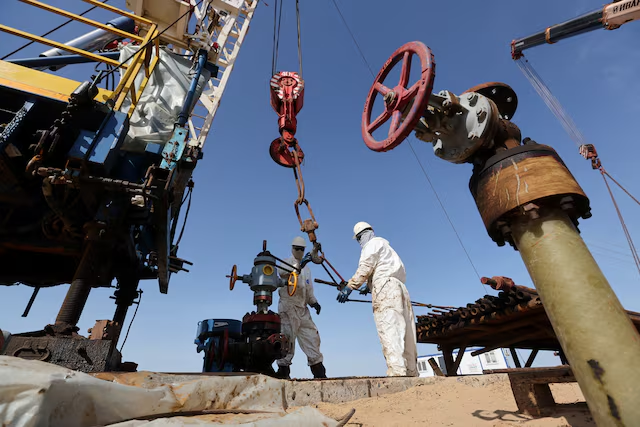
In addition to concerns over Iraq, traders continue to watch developments around the Strait of Hormuz, a strategic maritime passage through which roughly one-fifth of the world’s seaborne oil supply passes. Although shipping through the waterway has not been disrupted, previous periods of heightened tensions involving Iran have increased market volatility due to the route’s importance to global energy trade.
Market participants also remain focused on broader supply-and-demand fundamentals. Analysts note that production decisions by OPEC+, global economic growth, fuel demand in major consuming countries and inventory levels continue to influence oil prices alongside geopolitical events.
Despite the latest price gains, analysts cautioned that oil markets remain highly sensitive to changing geopolitical developments. Prices could fluctuate further depending on whether tensions ease through diplomatic engagement or escalate into a broader regional conflict affecting energy infrastructure.
Financial markets have historically responded quickly to geopolitical events involving major oil-producing regions, with investors factoring in the risk of future supply disruptions even when physical exports remain unaffected.
As of publication, there had been no official confirmation of damage to Iraq’s oil production facilities or export terminals resulting from the reported missile attacks. However, traders continued to monitor the situation closely, with market sentiment reflecting increased caution over potential risks to global crude supplies.