

Kenya has put 108 people in quarantine after the country detected 122 contacts of its first ever imported Ebola case, after which none of the monitored people showed symptoms, the Ministry of Health reported Sunday.
Health Cabinet Secretary Aden Duale said in a press release on Sunday, October 11, 2026, that all 122 contacts of the case had been identified and verified, with authorities seeking more contacts.
“All 122 contacts of the case have been listed and verified. 108 (88.5%) are in quarantine and monitored on a daily basis, and so far, none of them has developed any symptoms,” Duale said.
The development comes after the confirmation of a case of Bundibugyo Ebola virus disease on October 6. The patient had travelled from the Democratic Republic of the Congo via Uganda and later died, the ministry said.
The ministry reported that of 293 samples taken from 289 alerts, only the first case had tested positive. The remaining 14 contacts are being traced as the ministry monitors the 108 quarantined. The ministry did not give details on the 14 contacts that were not among those put in quarantine.
According to the ministry, Ebola symptoms take between two and 21 days to manifest. Therefore, the lack of manifestation of symptoms among those put in quarantine does not eliminate the possibility of them becoming ill.
The government has allocated five laboratories for testing, including mobile laboratories at the Lwakhakha and Busia border points. The ministry said it expected results from confirmatory tests within six to 12 hours.
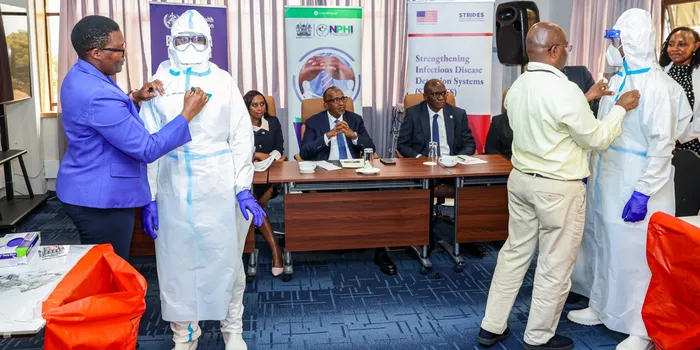
It also reported that a total of 241 beds in five hospitals in Nairobi, Eldoret and Mombasa were available for Ebola treatment, with intensive care units available at the Moi Teaching and Referral Hospital. In addition, health workers have been trained on Ebola prevention and management procedures.
As of October 11, 667,675 travellers had been screened at 26 points of entry, including 2,345 people in the last 24 hours. The government said airports, seaports and land borders were open, with no restrictions put in place on trade, travel, transport or public gatherings.
WHO says Ebola is spread through direct contact with the blood or other bodily fluids of a person with Ebola who is symptomatic, or with contaminated objects, such as needles. It is not an airborne illness like measles.
It also says the signs and symptoms of Ebola virus disease usually start between two and 21 days after a person is infected. The first symptoms are typically a sudden fever, chills, fatigue and muscle ache, together with headache and a sore throat. These are followed, after a few days, by vomiting and diarrhoea, and sometimes a skin rash and impaired liver function, resulting in jaundice and internal and external bleeding.
If you think you might have been exposed to Ebola virus, you should consult a healthcare professional who will take a full history and examine you. All suspected cases should be reported to the Ministry of Health on their toll-free line 719, they said.
Contact tracing, surveillance and tests continue to play a key role in curtailing the spread of the disease.