

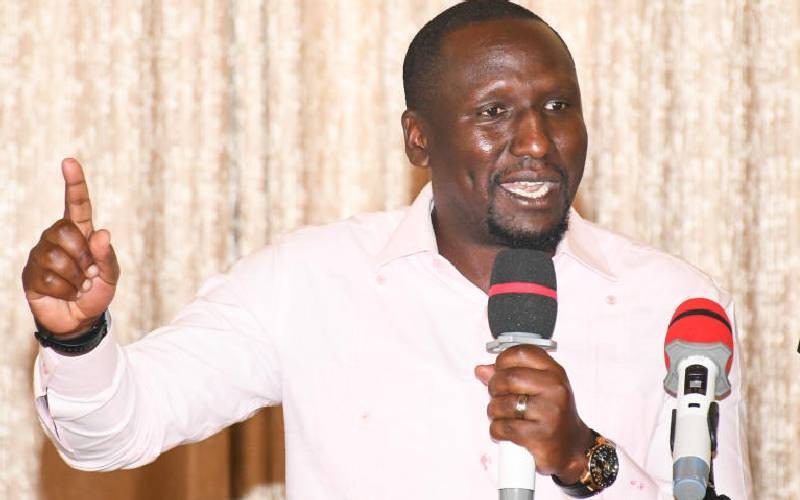
National Assembly Minority Leader Junet Mohamed has alleged that some Members of Parliament received payments during the 2024 impeachment of former Deputy President Rigathi Gachagua, claiming the money was intended to secure support for the motion that led to his removal from office.
The allegations were made during a joint ODM-UDA political rally in Malava, Kakamega County, where Junet claimed money was distributed to lawmakers as Parliament considered the impeachment motion. However, he did not provide documentary evidence or identify any legislators who allegedly received the payments.
“When we were removing Gachagua from office, something was moving around in Parliament. The accounting officer was Aaron Cheruiyot,” Junet said during the rally.
He further alleged that some legislators who received the money spent it unwisely, remarking that they should have invested it in building homes instead.
The remarks have sparked political debate because they suggest, without supporting evidence, that financial inducements may have influenced one of Kenya’s most consequential parliamentary votes. As of publication, Junet had not produced evidence to substantiate the claims, and no investigative agency or court has confirmed that Members of Parliament were bribed during the impeachment process.
Junet also mentioned Kericho Senator Aaron Cheruiyot in his remarks, alleging that he played a central role in the alleged distribution of funds. Cheruiyot had not publicly responded to the allegations at the time of publication.
Former Deputy President Rigathi Gachagua was impeached in October 2024 after the National Assembly and the Senate upheld charges against him, making him the first Deputy President to be removed from office through the constitutional impeachment process established under the 2010 Constitution. He was subsequently replaced by Deputy President Kithure Kindiki.
Following his removal, Gachagua challenged the impeachment in court. While the courts later found that aspects of the Senate proceedings violated his constitutional right to a fair hearing, they did not overturn Parliament’s decision, meaning the impeachment remained in force.
Junet’s latest remarks have renewed scrutiny of the integrity of parliamentary decision-making and the conduct of legislators during high-profile constitutional processes. If substantiated, allegations that lawmakers received payments to influence their votes could raise serious legal and ethical questions under Kenya’s anti-corruption and parliamentary accountability frameworks.
However, as matters stand, the claims remain allegations made by the Minority Leader during a political rally. No official investigation has concluded that Members of Parliament were paid to support Gachagua’s impeachment, and no evidence has been presented publicly to verify the assertions.
The developments are likely to intensify political debate over the 2024 impeachment, but any determination of wrongdoing would depend on credible evidence and findings by the relevant investigative or judicial authorities.