

President William Ruto has unveiled what he described as a long-term national vision intended to shape Kenya’s development beyond the lifespan of Vision 2030, calling on leaders and citizens to focus on sustained economic transformation rather than short-term political interests.
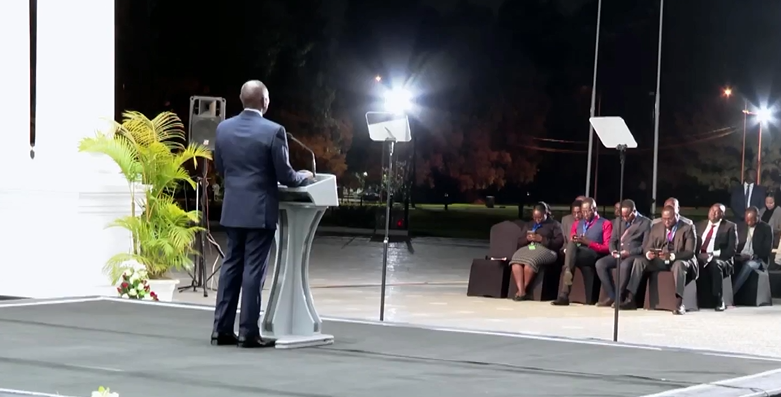
Speaking during a national address from State House, Nairobi, on Thursday, July 30, 2026, the President said Kenya had reached a pivotal stage in its development and should begin implementing a fresh national agenda aimed at expanding economic opportunities, improving public services and positioning the country for long-term growth.
Ruto said the proposed vision is designed to succeed Vision 2030—the country’s development blueprint adopted in 2008—and provide strategic direction for future generations.
“Every generation has a national idea that defines its ambitions. Ours must be bold enough to secure Kenya’s future,” the President said during his address.
The President argued that Kenya’s development should be guided by a shared national objective that outlives individual political administrations, saying the country’s ambitions should centre on higher productivity, industrialisation, infrastructure development, quality education and improved living standards.
His remarks come days after he received a report prepared by a team of Kenyan scholars outlining proposals for a new national development framework to replace Vision 2030. The report, titled Developing a New Vision for Kenya: Towards a First World Nation, was presented at State House on July 21 and is expected to inform public consultations before a final blueprint is adopted.
Ruto said the report should serve as the beginning of a broader national conversation rather than a final policy document.
“This proposal is a thoughtful and valuable contribution to an important national conversation. Its value lies not in providing every answer, but in asking important questions, challenging our assumptions, broadening our thinking and enriching our reflection on the choices that will shape Kenya’s future,” he said.
The Head of State maintained that achieving long-term development would require coordinated leadership across government, the private sector, civil society and other institutions, arguing that national progress should remain a collective responsibility.
He also reiterated that leadership would play a decisive role in determining whether Kenya achieves its long-term ambitions.
“Political leaders, business leaders, civil society leaders, professional leaders, religious leaders—we must all bring our leadership to bear for us to move this country to the next level,” Ruto said.
The proposed framework is expected to replace Vision 2030, which has guided Kenya’s economic and development planning for nearly two decades. Government officials say the successor blueprint will incorporate emerging priorities such as technological innovation, industrial competitiveness, infrastructure expansion, climate resilience, human capital development and sustainable economic growth.
The government has indicated that the proposed vision will undergo further stakeholder engagement and public participation before it is adopted as Kenya’s next long-term development strategy.