

Democracy for Citizens Party (DCP) leader Rigathi Gachagua has asked First Lady Rachel Ruto to urge President William Ruto to assure Kenyans that churches will remain safe spaces amid rising political tensions ahead of the 2027 General Election. Speaking in Portland, Oregon, during his ongoing tour of the United States on Monday, September 14, Gachagua said political disputes should not be taken into places of worship, which he described as places where people seek refuge during times of trouble. Gachagua made the remarks after Rachel Ruto presided over the reopening of a newly constructed church in Kiambaa, Uasin Gishu County. The church replaced the KAG Kiambaa Church, which was burnt during the 2007–2008 post-election violence. He said he expected the First Lady to use the occasion to speak to her husband about protecting places of worship from political violence.
“We trust that she will talk to her husband to give an assurance to the people of Kenya that the church is where people run to when they are in trouble,” Gachagua said.
He further called for a commitment that people would not be attacked inside churches, particularly in the event of political unrest.
Gachagua also revisited an alleged attack at ACK Witima Church in Othaya, where he said he and his supporters were attacked during a church service in January 2026. The former Deputy President alleged that police officers entered the church during the incident and used tear gas and other weapons. He further claimed that those responsible were known and that an investigation file had been prepared. Gachagua called on Rachel Ruto to ask the President to allow the police to prosecute those allegedly involved. The allegations have not been independently established, and Gachagua’s claims about the identities of those responsible and the alleged involvement of the President remain allegations. The January incident had previously drawn condemnation, including from Interior Cabinet Secretary Kipchumba Murkomen, who said violence in a place of worship was unacceptable.
Gachagua also compared the current political environment with the administration of former President Daniel arap Moi. He claimed that even during Moi’s controversial rule, people who sought refuge inside churches were not attacked and security officers would wait outside places of worship. The claim was presented as Gachagua’s recollection of the period and was not supported by specific evidence during his remarks. His wider argument was that churches should remain protected spaces regardless of political differences or the identity of those seeking refuge.
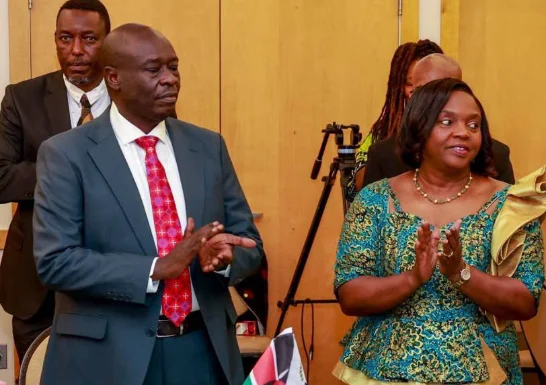
Gachagua’s comments came days after Rachel Ruto reopened the rebuilt Kiambaa church, a site associated with one of the most tragic episodes of Kenya’s 2007–2008 post-election violence. The original church was burnt during the violence, resulting in the deaths of 30 people, according to reports on the reopening. The rebuilding and reopening of the church has consequently brought renewed attention to the protection of places of worship during periods of political conflict. Gachagua used the occasion to argue that Kenya should not repeat the violence witnessed after the 2007 election. His remarks also come as political parties and emerging movements intensify mobilisation ahead of the 2027 election, increasing the prominence of issues surrounding political violence, national cohesion and the role of religious institutions.
For now, Gachagua is asking Rachel Ruto to seek a public assurance from the President that churches will remain safe places and that political confrontations will not be allowed to endanger worshippers.