

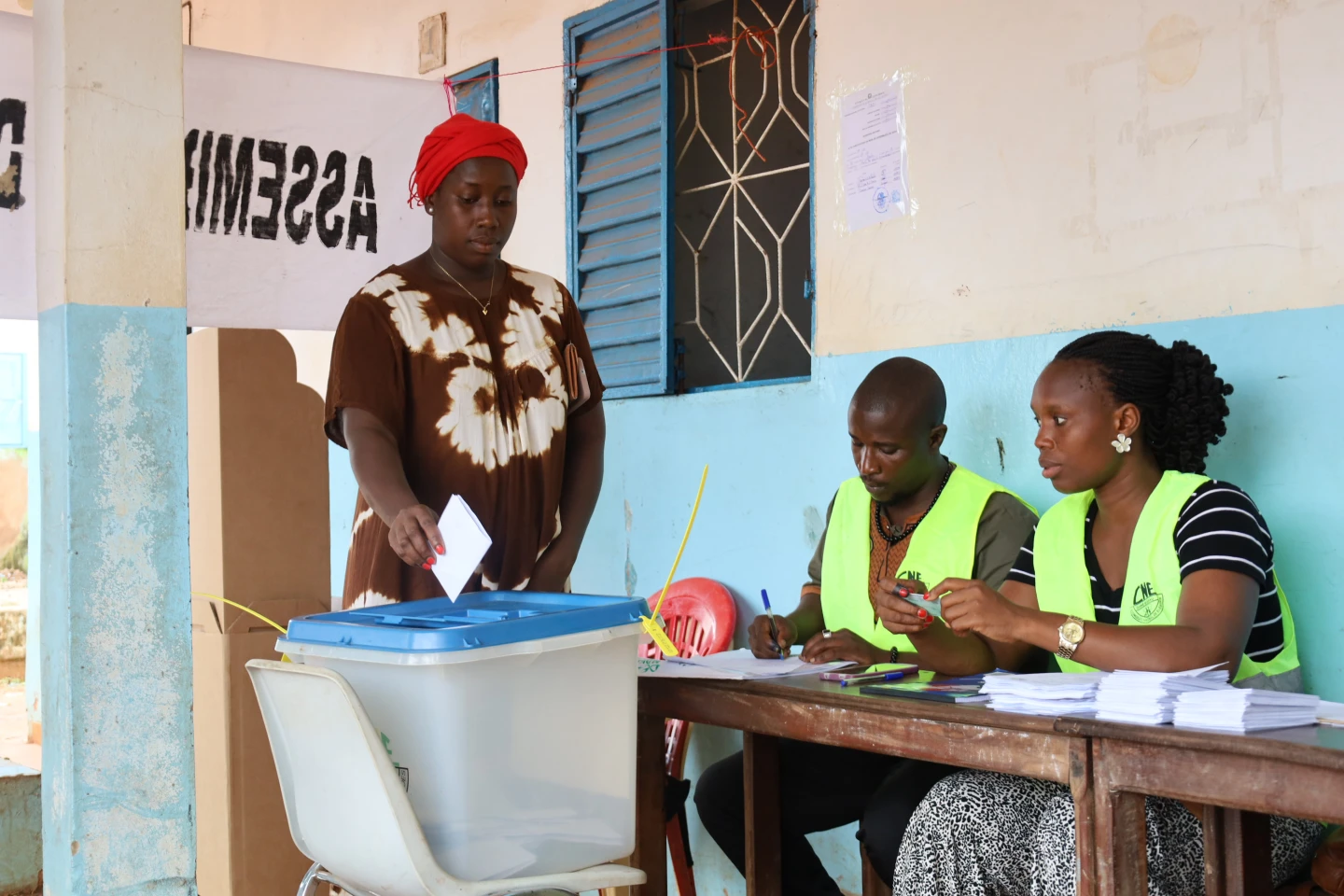
Guinea-Bissau voters have provisionally approved a new constitution that significantly strengthens the powers of the presidency, according to results announced by the National Electoral Commission. The commission said 70% of voters backed the constitutional changes, while 30% voted against them in the referendum held on August 30. The results are provisional and were announced on September 1. The vote marks a significant change to the political structure of the West African country, with the proposed constitution giving the president greater control over the executive and reducing the role of the prime minister and Parliament.
Under the new constitutional framework, the president would have the authority to appoint and dismiss the prime minister and cabinet, create or abolish government ministries and chair the Council of Ministers. The president would also be able to dissolve Parliament in circumstances defined as a grave political crisis and dismiss the government under certain conditions. The changes therefore shift much of the executive authority that previously existed between the president, prime minister and legislature towards the presidency.
The constitutional changes also provide for a smaller legislature. Parliament, which currently has 102 seats, would be reduced to 65 under the new arrangement. The number of electoral constituencies would also fall from 29 to 12. The reforms further introduce new eligibility requirements for presidential candidates, including a requirement that candidates have lived continuously in Guinea-Bissau for at least five years before seeking the presidency. The changes are being implemented as Guinea-Bissau attempts to move towards a return to elected civilian government following months of military rule.
The country’s military seized power in November 2025, shortly after a disputed presidential election. The takeover interrupted the electoral process and placed the country under transitional military-backed authorities. The transitional authorities subsequently put forward the constitutional reforms and scheduled presidential and legislative elections for December 2026 as part of the planned return to civilian rule.
The referendum, however, was held amid strong opposition from Guinea-Bissau’s main opposition party, the African Party for the Independence of Guinea and Cape Verde (PAIGC). The party called for a boycott, arguing that the constitutional process was being conducted by institutions established following the military takeover therefore lacking sufficient democratic legitimacy. PAIGC and other critics have also raised concerns that concentrating greater authority in the presidency could weaken Parliament and reduce institutional checks on executive power. The party questioned whether the reforms would strengthen Guinea-Bissau’s democratic institutions or instead consolidate the authority of the transitional leadership. The boycott also affected the political character of the referendum. Reuters reported that some polling stations in the capital, Bissau, appeared sparsely attended, while some voters said they were unclear about the purpose of the referendum or did not fully understand the proposed constitutional changes.
Despite those concerns, electoral authorities reported that about 544,060 people took part, representing nearly 60% of the roughly 915,000 registered voters. The provisional result therefore gives the proposed constitution a clear majority among those who participated, although opposition groups continue to question the credibility and political circumstances surrounding the vote.
The most significant change is the redistribution of executive power. Guinea-Bissau has operated under a semi-presidential system in which authority is shared between the president and prime minister. Under the proposed constitution, the president would have a much more direct role in forming and controlling the government. The president’s ability to appoint and remove the prime minister and cabinet would give the head of state substantially greater influence over the executive branch. The ability to reorganise ministries and, under specified circumstances, dissolve Parliament would further strengthen the presidency. Supporters of the reforms have presented the changes against the backdrop of Guinea-Bissau’s long history of political instability, arguing that clearer lines of authority could help address repeated conflicts between the presidency, government and Parliament.
The constitutional changes now set the stage for Guinea-Bissau’s planned December 2026 presidential and legislative elections. Those elections will be an important test of whether the country can move from military-backed transitional rule to an elected government under the new constitutional framework. The referendum’s outcome also means that political parties preparing for the December elections will have to operate within a system that gives the presidency significantly greater authority than under the previous arrangement.
For Guinea-Bissau, the immediate question is therefore not only whether the new constitution receives final approval, but whether the constitutional changes can provide a stable political framework while maintaining effective legislative and institutional oversight. For now, the 70% provisional vote in favour represents a clear electoral endorsement among those who participated, but the boycott by major opposition forces means the political debate over the legitimacy and long-term implications of the new system is unlikely to end with the referendum result.