

Nairobi County Chief Officer for Environment Geoffrey Mosiria has called for an investigation into the circulation of alleged explicit videos linked to Kenyan content creator Sheryl Gabriella, as the controversy continues to attract widespread attention online.
Mosiria urged security and cybercrime authorities to establish the circumstances surrounding the material and determine whether any laws were broken.
In his public remarks, Mosiria argued that authorities should investigate whether the content was deliberately recorded or distributed and take appropriate action if an offence is established.
“We cannot allow this kind of behaviour to become normal in our society,” Mosiria said in comments reported by local media, while calling on the relevant authorities to investigate the matter.
It also remains important to distinguish between content deliberately published by the person involved and intimate material shared without consent. The circumstances under which the videos circulating online were obtained or distributed have not been independently established.
Sheryl later responded to the controversy on social media, taking a light-hearted approach to Mosiria’s remarks.
According to K24 Digital, she said her mother had called and asked her to return home following reports that Mosiria wanted authorities to investigate the matter.
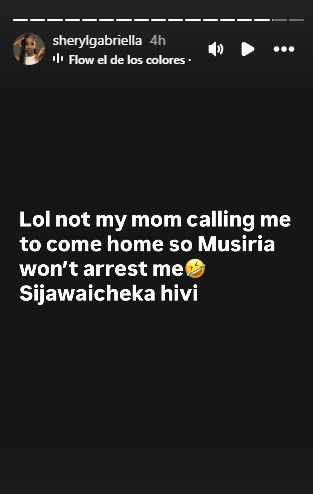
“Mum called me and told me to go home so that Mosiria does not arrest me,” she said in a social media post reported by the publication. Sheryl also used the increased attention surrounding her name to invite businesses interested in advertising through her social media platforms.
Beyond the personalities involved, the controversy has renewed discussion about privacy, consent and the circulation of intimate material online.
The mere appearance of a person in intimate content does not, on its own, establish that the person consented to its public distribution. Determining whether material was deliberately published, leaked or shared without permission requires evidence.
Kenyan law contains provisions addressing both prohibited online content and the non-consensual sharing of intimate images. The applicable legal issues would therefore depend on the circumstances established through an investigation.