

Lecturers in Kenyan public universities may embark on an indefinite strike from October 2, 2026, after the Universities Academic Staff Union (UASU) issued the government a seven-day ultimatum to settle issues relating to the new Collective Bargaining Agreement (CBA). UASU Secretary-General Constantine Wasonga announced the plans, on Thursday, September 24, asserting that the industrial action would commence if the government does not begin negotiations, sign and implement the 2025-2029 CBA, within the specified period.
The UASU blamed the university councils, Ministry of Education, and National Treasury for not abiding by the Return-to-Work Formula signed on November 5, 2025, for the resumption of teaching and learning.
“The strike shall commence at midnight next Friday 2 nd October 2026. This painful decision comes as a result of the continuous non-implementation by the councils of universities, the Ministry of Education and the National Treasury of the Return-to-Work Formula signed on 5 th November 2025,” UASU declared.
The main sticking point in the 2025-2029 CBA negotiations between UASU and the government is the source of funds for lecturers’ salaries. UASU asserts that the government has not submitted its financial counter-proposal for the new CBA. The union is also demanding that funding of academic staff remuneration should come from the National Exchequer and not from the universities through student fees and other market-related aspects. Wasonga said that UASU would not entertain proposals to fund national CBAs through the fees collected by the universities.
“National CBAs cannot be funded by individual universities. National CBA is supposed to be funded from the national exchequer,” Wasonga said.
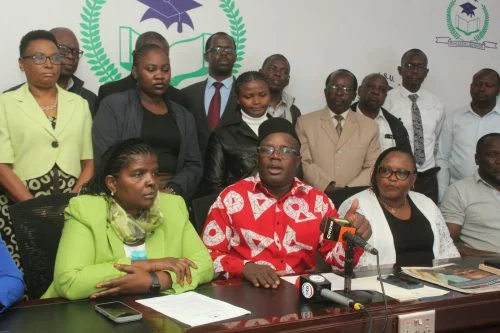
The impasse began when UASU alleged that the Salaries and Remuneration Commission (SRC) told its university sector unions, on September 21, that there was no written commitment from the Ministry of Education and the Treasury regarding funding CBAs from the National Exchequer. In addition, the unions are concerned with the rising numbers of part-timers and adjunct lecturers in universities as well as the increased workload for permanent staff. According to People Daily, statistics from the Commission for University Education show that the number of adjunct academic staff increased from 758 in 2024 to 1,611 in 2025. The student-teacher ratio in public chartered institutions also increased.
Wasonga claimed that the government owed approximately KSh100 billion to public universities and that this debt would ease if the outstanding amounts were cleared. However, it remains unclear whether the amount is genuine since UASU stated it in its reports without providing credible evidence.
The union also claimed that the government has delayed statutory remittances, pension contributions, and other payments to public universities. UASU demands that the government should sign, register and implement the 2025-2029 CBA and provide a firm commitment to the source of funds for the new agreement. The union further asked that safeguards be put in place, through the Tertiary Education Placement and Funding Bill, 2026, to guarantee that the salaries of public university teachers would be paid from the Exchequer. If the government fails to deliver within the next seven days, lecturers in public institutions will commence their nationwide strike at midnight on October 2. The proposed strike will affect academic activities in public universities as they remain locked in a prolonged and debilitating dispute with the government.