

African Leaders Must Focus on Locally Processing Its Natural Resources Instead of Exporting It, Says President William Ruto. President William Ruto has called for an end to the African approach to natural resources as countries continue to rely on the export of raw materials. Speaking during the 81 st United Nations General Assembly in New York on Wednesday, September 23, Ruto argued that Africa’s wealth of minerals, agriculture, and renewable energy should fuel local industries.
“Africa’s resources must be the genesis of African industry, not the terminus of Africa’s contribution to the value chain,” said Ruto. “Extraction defined too much of our past. Investment must underpin our future.
The President argued that more value should be drawn from the continent’s resources before sending them to other nations for processing, which, in his view, has denied Africa industrialization, job opportunities, and skills acquisition. President Ruto delivered the comments as Kenya seeks to woo investors to build systems on value addition to its minerals and energy while localizing as much as possible.
During the meetings with US Secretary of State Marco Rubio on Monday, September 21, the issues of critical minerals figured prominently as Washington promised to position itself to take advantage of the opportunities for value addition in the mineral sector. Mining Cabinet Secretary Hassan Joho has also argued that Kenya wanted minerals such as rare earth metals, lithium, graphite, copper, nickel, and niobium processed and refined locally before any of the minerals is exported.
“Kenya’s position is clear, we cannot compromise on local beneficiation,” said Joho when addressing an Africa Minerals Strategy Group in New York, Nation reported.
Last month, President Ruto made a similar argument when he was in Kajiado for the National Mining Summit. He said they wanted investors to come to set up processing and manufacturing industries in Kenya rather than coming to take minerals and walk away.
“We want them to invest. We do not want extraction anymore,” Ruto said.
Ruto also spoke of Kenya’s proposed East Africa refinery that the government will use to accelerate the country’s industrialization and value addition on the continent. The President announced that they expect to break ground on the $16 billion East Africa Refinery in Lamu on September 30.
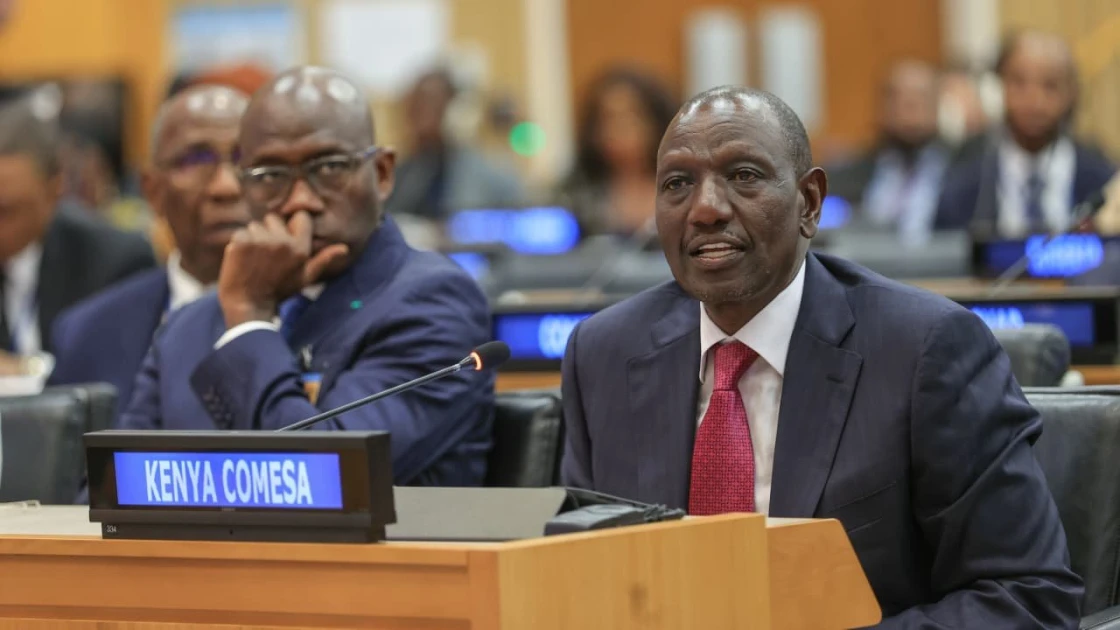
“We are ready to break ground on the East Africa refinery in Lamu, a transformative project that will enhance the region’s energy security, deepen local value addition, create jobs, and advance our industrialisation agenda,” Ruto said during his Wednesday speech.
The refinery, which will be built in partnership with Dangote Industries and Africa Finance Corporation, will have a daily processing capacity of 700,000 barrels of crude oil. Ruto cited the refinery project as one of the developments that inform his argument for a different approach to Africa’s natural resources during his Wednesday speech at the UN General Assembly. The President said the refinery and the value addition it represented would create more than 60,000 jobs and spur downstream activities in petrochemicals, logistics, and manufacturing in Lamu County. In addition to value addition and industrialization, Ruto urged Africans to mobilize more domestic capital to fund various development projects as he cited a huge amount of money tucked away in different forms in the region.
According to Ruto, over $4 trillion is parked in African pension funds, insurance companies, soveriegn wealth funds, and banks – a significant portion of which should be allocated to long-term financing of infrastructure, industrialization, and other key sectors.
“Capital must price risk; it must not price prejudice,” said Ruto, who called for a complete overhaul of the global financial system as he urged leaders to increase the flow of long-term financing to African economies.
Value addition, localization of industrialization, and mobilization of African capital to fund various development projects feature prominently in Ruto’s argument that Africa needs to control the resources and dictate how they are used to develop the continent.