

President William Ruto has pledged to make Kenya a leading supplier of leather products and shoes within a period of two to three years. The Head of State made the remarks at the Agriculture and Food Security town hall held at Jamhuri Park in Nairobi on Thursday, October 8, 2026.
President Ruto said the government is determined to promote the use of locally sourced leather and discourage the importation of finished leather products.
“We need to have a situation where within a short time, two or three years, we are not importing shoes from anywhere; we must be manufacturing shoes here in Kenya and all these leather products,” he said.
According to The Standard, the President noted that there were eight leather manufacturing companies that had already started using African leather to produce local products but urged them to step up their efforts to produce higher quality leather products, especially shoes, within the specified timeline.
“I’m just waiting for the manufacturers to improve on their quality,” Ruto said.
The President identified the boots worn by security personnel as one of the leather products that the government wanted to produce locally.
“For all our uniformed officers, all the boots that we are importing from China, and I don’t know where, we want to make them here,” he said.
The President’s directive fits within the larger strategy of encouraging the utilization of locally available materials in the production of finished goods.
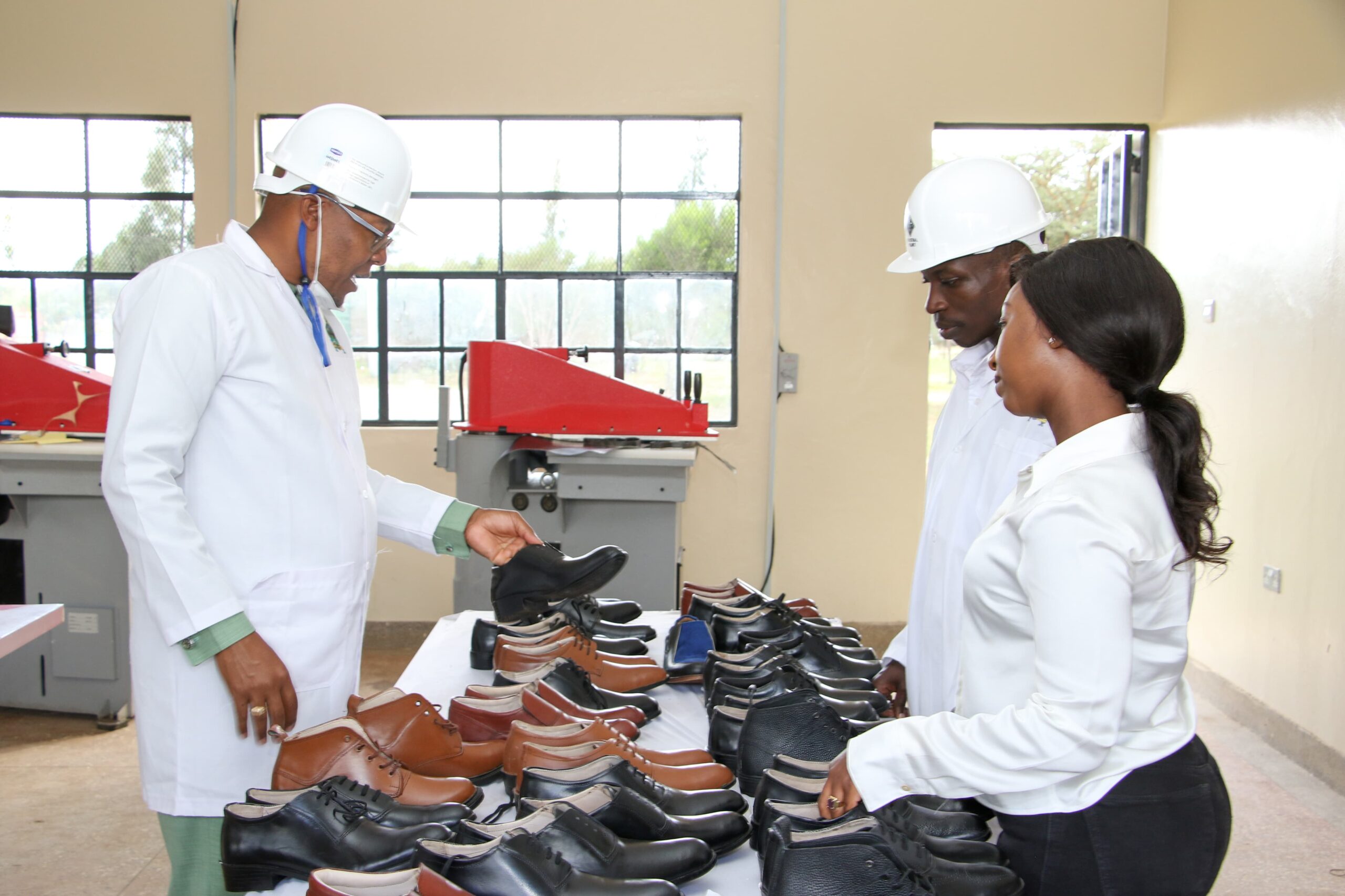
In line with this objective, Kenya’s livestock industry can play a significant role in the leather market by processing more of the hides and skins that would have otherwise been exported to China and other countries.
The leather processing and manufacturing industry, if fully utilized, has the potential to create numerous job opportunities for many Kenyans. It will be interesting to see whether local manufacturers will be able to meet the demand for various types of leather products, including shoes.
The President needs to provide more details on how the government intends to implement its directive to stop importing shoes and other leather products. While the government has long understood the need to develop and grow Kenya’s leather industry, it has yet to come out with substantive policies to achieve its vision.
There are already some initiatives that have been implemented with the aim of boosting leather manufacturing in Kenya. One such project is the Kenya Leather Industrial Park in Kenanie, Machakos County.
Ruto’s directive is a positive step towards making Kenya a leather manufacturing hub, but the government must come up with more innovative ways to utilize the available leather resources to generate income in billions of Kenyan Shillings.