

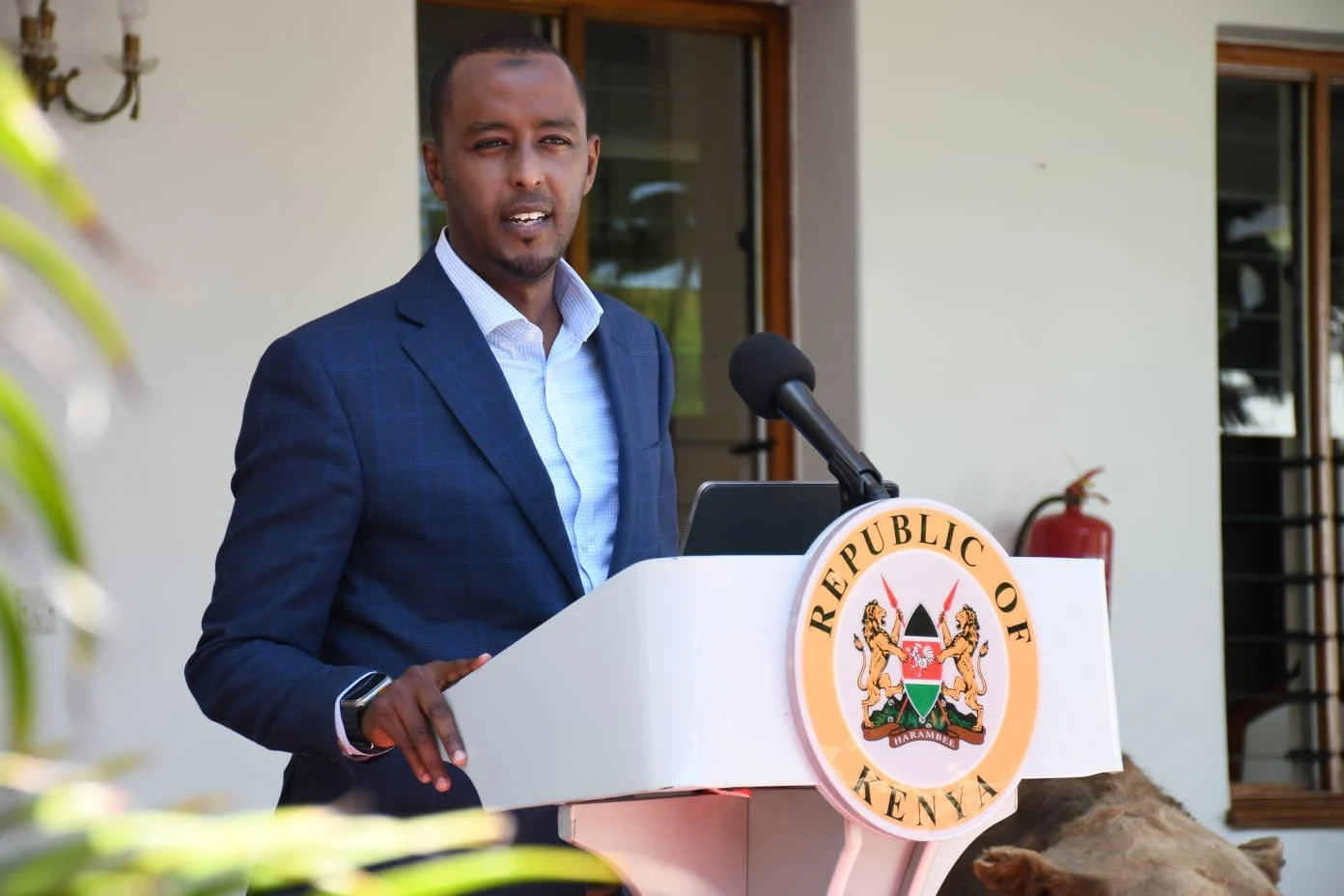
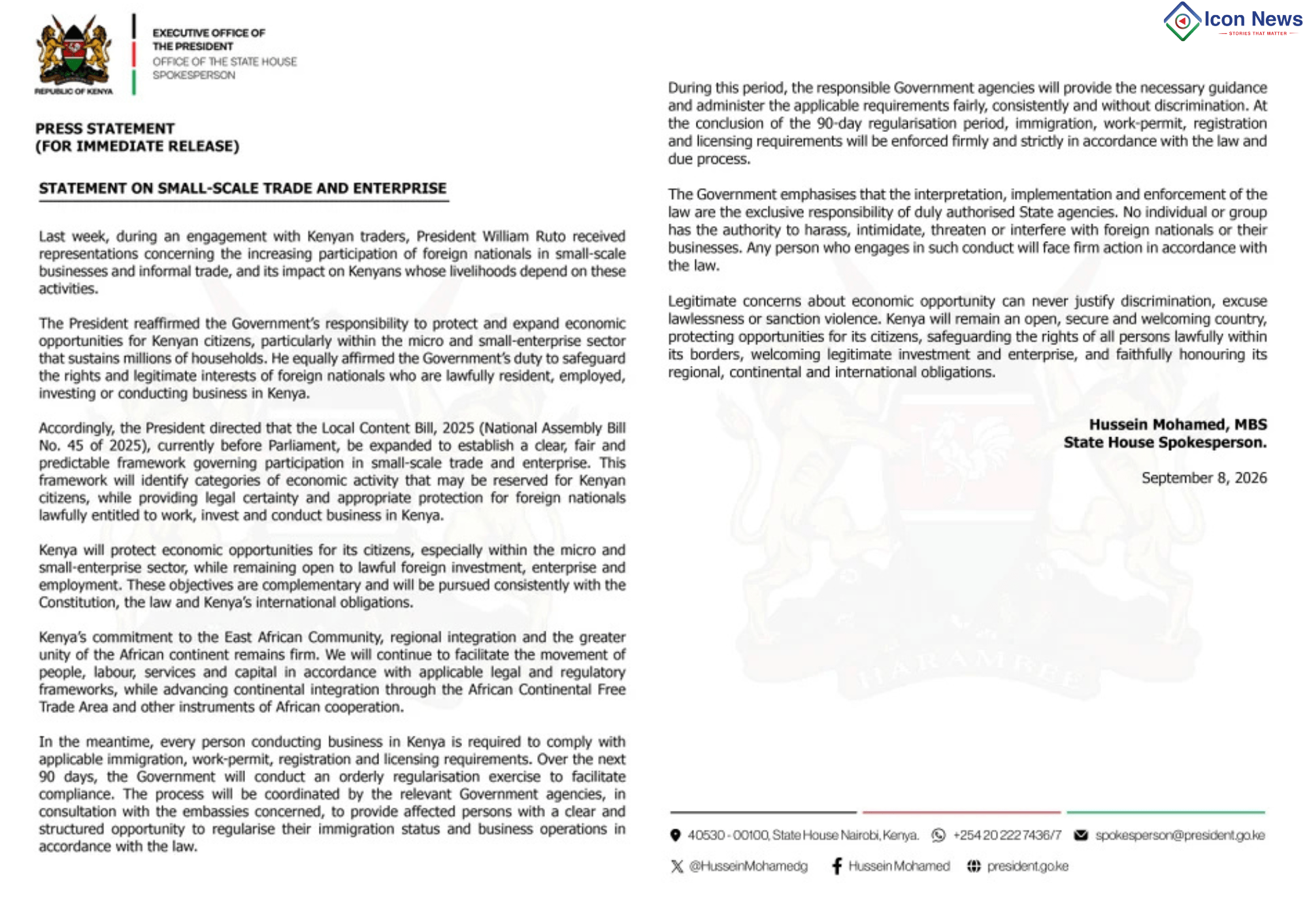
President William Ruto has directed the government to give foreign nationals conducting business in Kenya 90 days to regularise their immigration status and business operations before existing laws are enforced more strictly. State House Spokesperson Hussein Mohamed announced the directive on Tuesday, September 8, saying the exercise followed concerns raised by Kenyan traders over foreign participation in small-scale businesses and its impact on local livelihoods. The regularisation exercise will cover immigration status, work permits, business registration and licensing requirements, with relevant government agencies expected to coordinate the process in consultation with the embassies of affected foreign nationals. Mohamed said the exercise would give foreign nationals operating businesses in Kenya an opportunity to bring their operations into compliance with the law.
At the same time, he said the government would continue protecting foreign nationals who are lawfully resident, employed, investing or conducting business in Kenya. According to State House, Ruto’s directive followed an engagement with Kenyan traders who raised concerns about competition from foreign nationals in the micro and small-enterprise sector. The President reaffirmed the government’s responsibility to protect economic opportunities for Kenyan citizens, particularly in businesses that support millions of households. However, the government also stressed that the exercise should not be interpreted as a blanket measure against foreign nationals or legally operating businesses.
Mohamed said the rights and legitimate interests of foreign nationals who comply with Kenyan laws would remain protected. The government has also warned against harassment, intimidation or violence targeting foreigners, saying concerns over economic competition cannot justify unlawful action.
Ruto has directed that the Local Content Bill, 2025, currently before Parliament, be expanded to establish clearer rules on foreign participation in small-scale trade. The proposed framework is expected to identify economic activities that could be reserved for Kenyan citizens while providing a legal framework for foreign nationals who are entitled to work, invest or conduct business in the country. Any new restrictions arising from the proposed legislation would still have to go through the parliamentary process before becoming law. This means the current 90-day exercise should not be confused with an immediate legal ban on all foreign-owned small businesses. For now, the government is focusing on compliance with existing immigration, work-permit, registration and licensing requirements.
The government has said the regularisation process will be administered fairly and consistently, with the relevant agencies expected to guide affected foreign nationals through the requirements.
At the end of the 90-day period, Mohamed said immigration, work-permit, business-registration and licensing rules would be enforced firmly and strictly, in accordance with the law and due process. The announcement marks a shift from the immediate enforcement approach announced by Ruto last week. On September 2, the President had directed authorities to begin shutting down businesses operated by foreign nationals in small-scale trade, arguing that some activities should be reserved for Kenyans. The directive was expected to take effect from September 7. The subsequent 90-day window has provided foreign traders with additional time to establish whether they meet the legal requirements for operating in Kenya.
The government’s position comes amid heightened concern among foreign traders, particularly Burundian nationals. Hundreds of Burundians sought assistance at their embassy in Nairobi amid uncertainty over their businesses and immigration status. Reuters reported that some were seeking travel documents as concerns grew over possible enforcement action. The government has separately said it will not tolerate xenophobia or harassment and has urged undocumented foreign nationals to use the available registration and documentation channels. The 90-day exercise therefore creates a defined period for foreign nationals conducting business in Kenya to regularise their status, obtain or update the necessary permits and licences, and ensure their businesses comply with existing laws.
What happens after that period will depend partly on enforcement of existing regulations and partly on the parliamentary process surrounding the proposed changes to the Local Content Bill. For Kenyan traders, the government says the objective is to protect opportunities in the small-business sector. For foreign traders, the immediate priority is to establish and maintain lawful immigration, work and business status before the government begins stricter enforcement.