

The government has activated its national response plan as it braces for the onset of the El Niño rains, with search-and-rescue teams, evacuation centres and emergency supplies placed on standby.
In a statement released on Monday, October 5, 2026, the Ministry of Interior and National Administration said the response plan will involve the National Disaster Operations Centre (NDOC), with interventions tailored to the scale and location of incidents. The Kenya Coast Guard Service, Kenya Defence Forces, National Police Service, Kenya Red Cross Society and National Youth Service will carry out search-and-rescue operations in affected areas.
The government has put evacuation and displacement centres on standby and put in place a minimum standard operational registration system to register and manage internally displaced persons caused by floods and other rain-related hazards. Life-saving alternative means and routes of access will be put in place where roads and other means of transportation are disrupted, while air support will be provided by the NDOC if necessary.
The government said relief supplies and emergency shelter materials have been positioned for deployment to the evacuation centres, in addition to food stocks placed in 10 priority counties. The counties include Tana River, Garissa, Kisumu, Busia, Nakuru, Mombasa, Kilifi Wajir, Mandera and Turkana.
Health authorities have activated the Public Health Emergency Operations Centre and Incident Management System to manage and coordinate emergency health services, as well as reinforce disease surveillance for waterborne and vector-borne diseases. Surveillance of water sources will be enhanced in the affected areas, with water treatment products and emergency nutrition commodities procured for use in emergency shelters. Emergency shelter sanitation facilities in the settlement areas will be evaluated to help prevent health risks.
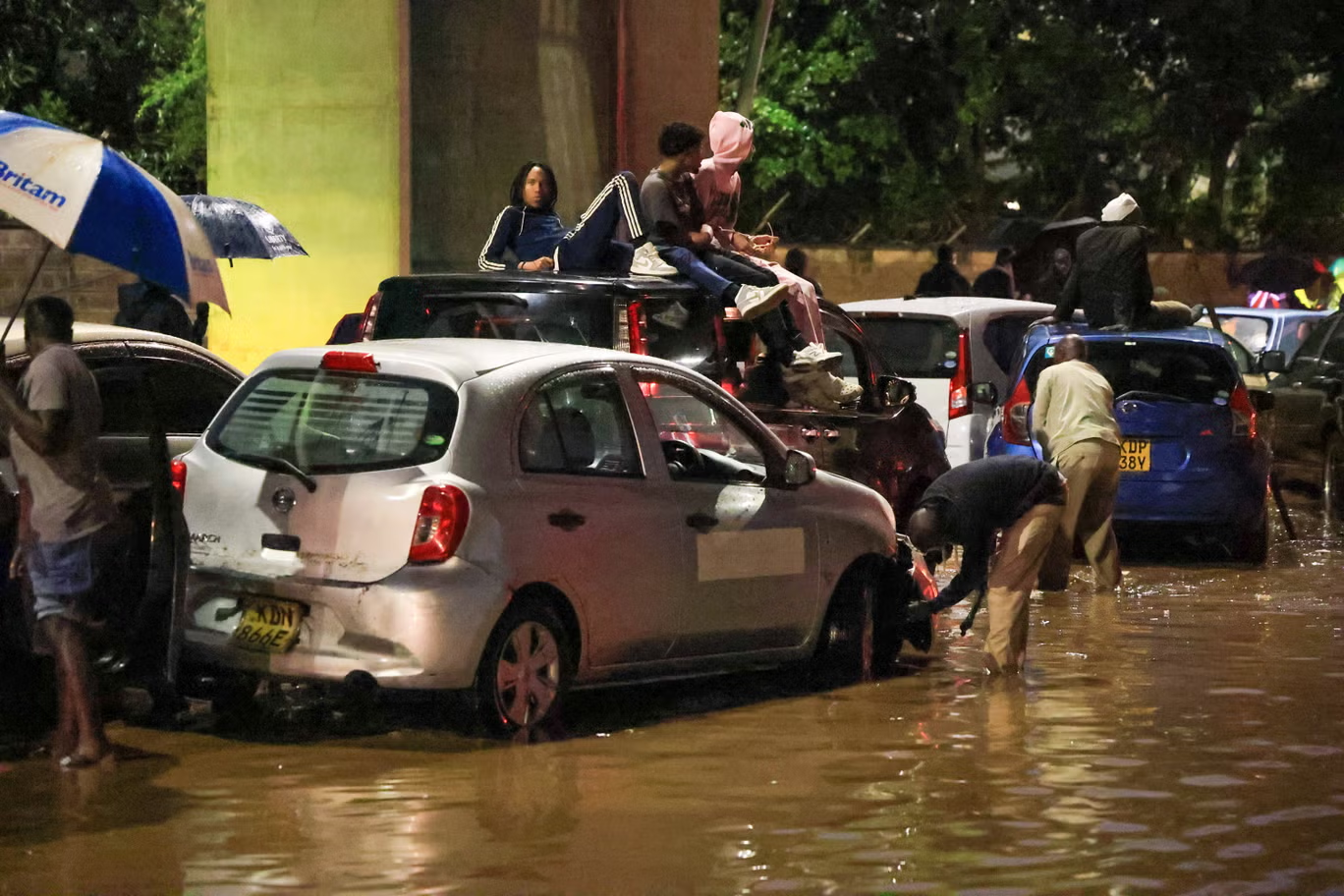
On the county level, the Ministry of Interior said county governors and county commissioners will ensure preparedness and response measures are taken through County Disaster Risk Management Committee and County Emergency Operation Centre structures. Sub-county disaster management teams will collaborate with National Government Administration Officers, county disaster management committees, community health promoters and other partners to support local alertness and response.
The government had earlier identified areas prone to flooding and other weather-related hazards, such as riverine and low-lying settlements, landslide-prone areas and urban centres with potential to experience inland flooding. The authorities have been working on clearing drains and examining bridges, roads and other infrastructure to mitigate the risks. The Ministry of Interior warned that preparedness measures do not eliminate the risks brought about by heavy rainfall.
“Preparedness measures should not be used to lower disaster risks, and people living in riverbanks, riparian reserves, low-lying areas and around human-made slopes and structures that are prone to erosion and landslides should seek alternative shelter,” the ministry said.
The government said it will remain on alert for weather and disaster risks through the NDOC and county structures, with emergency response plans reviewed and updated as necessary.