

Health Cabinet Secretary Aden Duale has avoided punishment after the High Court accepted his apology over his failure to comply with court orders that had suspended the construction of a controversial Ebola quarantine facility at Laikipia Air Base.
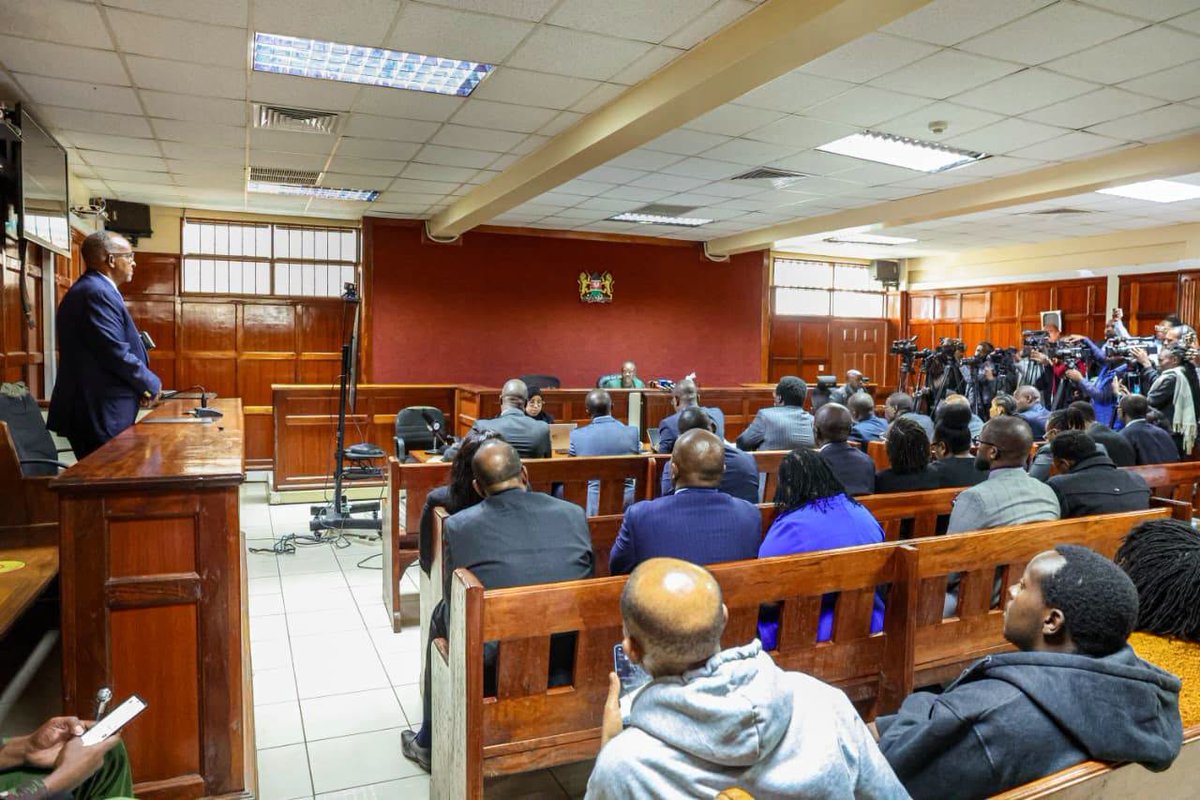
Duale appeared before the High Court on Tuesday after being summoned to explain why he should not be punished for contempt of court. The court had earlier found that the Ministry of Health continued with works on the facility despite conservatory orders barring any further construction pending the determination of a constitutional petition challenging the project.
During the proceedings, Duale acknowledged the court’s findings and apologised, saying it had never been his intention to undermine the authority of the judiciary. He told the court that he had since directed the immediate suspension of all activities related to the project and assured the judge that the ministry would fully comply with all future court orders.
Justice Patricia Nyaundi accepted the apology and declined to impose a jail sentence or any other penalty. However, the judge warned the Cabinet Secretary that any future disregard of court directives could attract sanctions, underscoring that obedience to court orders is a constitutional obligation regardless of the office one holds.

The contempt proceedings stem from a petition filed by Katiba Institute, which challenged the government’s decision to establish the Ebola preparedness and quarantine facility at Laikipia Air Base. The organisation argued that construction continued even after the court had issued conservatory orders suspending the project.
In a ruling delivered a day before Duale’s court appearance, Justice Nyaundi found that the Ministry of Health had acted in defiance of the court’s directives, prompting the summons requiring the Cabinet Secretary to personally appear for mitigation and sentencing.
The dispute has become one of the country’s most closely watched public health cases, raising questions about adherence to judicial authority, transparency in government decision-making and public participation in health-related infrastructure projects.
The government has maintained that the planned facility forms part of Kenya’s preparedness against Ebola and other highly infectious diseases, particularly in light of the continuing outbreak in the neighbouring Democratic Republic of the Congo. Officials have argued that the project is intended to strengthen the country’s emergency response capacity and meet international public health obligations.
However, the project has faced opposition from sections of the public and civil society organisations, which questioned both the location of the facility and the process through which it was approved. The petitioners argued that the government failed to undertake adequate public participation before commencing construction and sought court intervention to halt the works pending a full hearing.
The High Court subsequently issued conservatory orders suspending implementation of the project, but evidence presented before the court indicated that construction activities continued despite those directives, leading to the contempt proceedings against the Health Cabinet Secretary.
With the court accepting Duale’s apology, the immediate contempt proceedings have come to an end. However, the substantive petition challenging the legality of the Ebola facility remains before the High Court, meaning the suspension of the project will continue until the case is heard and determined.
The ruling serves as a reminder that court orders remain binding on all public officials and government institutions, regardless of the public interest attached to a project, until they are varied or set aside through the legal process.
