

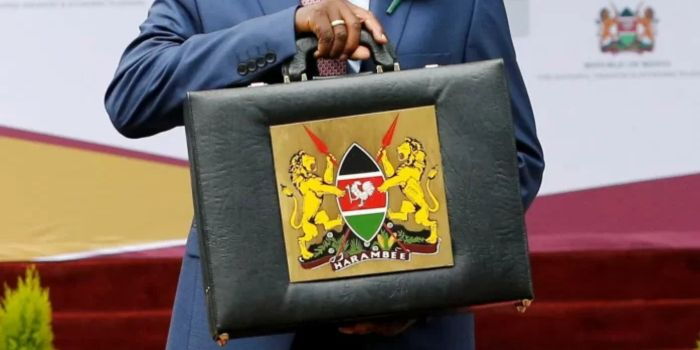
The National Assembly on Thursday passed the Finance Bill, 2026, handing the Kenya Kwanza administration a key legislative victory as it seeks to finance the 2026/27 national budget through a revised package of tax and revenue measures.
The Bill was approved at the Third Reading after 122 Members of Parliament voted in favour, 40 against, with 185 members being absent concluding weeks of committee scrutiny, public participation and parliamentary debate. It will now be transmitted to President William Ruto for assent before it can take effect as the Finance Act, 2026.
The legislation forms the legal basis for implementing tax measures contained in the 2026/27 budget and introduces amendments to several key statutes, including the Income Tax Act, the Value Added Tax (VAT) Act, the Excise Duty Act, the Tax Procedures Act, the Miscellaneous Fees and Levies Act, and the Stamp Duty Act.
The National Treasury says the changes are intended to strengthen domestic revenue mobilisation by improving tax administration, expanding the tax base and sealing compliance gaps, while generating resources to finance government expenditure in sectors such as health, education, infrastructure and county governments.
Before reaching the House for its final vote, the Bill underwent detailed scrutiny by the Departmental Committee on Finance and National Planning, which received submissions from businesses, professional associations, civil society organisations and members of the public.
Debate on the Bill exposed clear political divisions in the National Assembly, with government and opposition MPs offering contrasting views on the proposed tax changes.
Members supporting the Bill argued that stronger domestic revenue collection is necessary to reduce dependence on borrowing and provide sustainable funding for public services and development projects. They maintained that many of the proposed amendments focused on improving compliance and closing loopholes rather than introducing broad-based tax increases.
Opposition legislators, however, expressed concern that some provisions could increase operating costs for businesses and place additional financial pressure on households. They urged the House to reject or amend sections they considered likely to raise the cost of living. Earlier on Thursday, Democracy for Citizens Party (DCP) Leader, Rigathi Gachagua, directed all its affiliated Members of Parliament to vote against the Finance Bill 2026.
On the other hand, legislators allied to the government including Majority leader Kimani Ichung’wah defended the Bill, maintaining that it was necessary to enhance revenue collection and support the country’s development agenda. Despite the objections, the government secured sufficient support to pass the legislation comfortably at its final stage.
The Finance Bill is one of the government’s principal fiscal instruments and is enacted annually to give legal effect to tax measures announced in the national budget. Once signed into law, the Finance Act, 2026 will introduce changes affecting taxpayers across multiple sectors of the economy. Among its broader objectives are strengthening tax compliance, enhancing enforcement by the Kenya Revenue Authority, updating provisions on VAT, income tax and excise duty, and improving the efficiency of revenue collection.
While the government has presented the Bill as part of a broader strategy to strengthen public finances, its implementation is expected to be closely monitored by businesses, investors, tax professionals and consumer groups assessing the practical effects of the new measures on economic activity and household costs.
Following its passage by the National Assembly, the Bill now awaits presidential assent. If signed by President Ruto, most provisions are expected to come into force at the beginning of the 2026/27 financial year, unless individual clauses specify different commencement dates.
The Kenya Revenue Authority and the National Treasury are also expected to issue implementation guidelines where necessary to facilitate compliance with the new legal provisions.
The passage of the Finance Bill marks the completion of one of Parliament’s most consequential legislative processes each financial year, establishing the tax framework that will underpin government revenue collection and the execution of the national budget in the months ahead.
