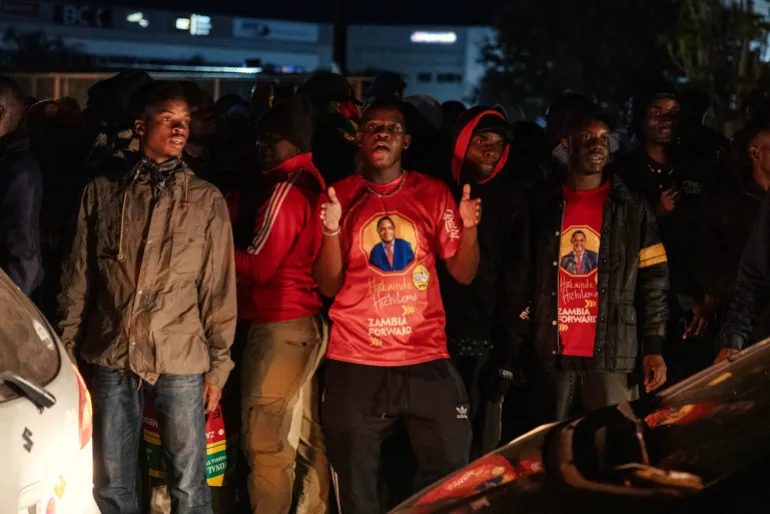
President Hakainde Hichilema has been re-elected for a second five-year term after securing 61.4% of the vote in Zambia’s August 13, 2026 presidential election, according to official results announced by the Electoral Commission of Zambia (ECZ). The result, announced in the early hours of Tuesday, August 18, gives Hichilema an outright victory and removes the need for a second round of voting. He received nearly 3 million votes out of about five million votes cast. His main challenger, Brian Mundubile, received approximately 38%, equivalent to about 1.86 million votes. Hichilema, who first won the presidency in 2021, will now serve another five-year term at a time when Zambia is dealing with both economic recovery and continuing concerns over the cost of living. The incumbent’s campaign highlighted his administration’s efforts to restructure Zambia’s debt, attract investment and strengthen the country’s economy following a debt crisis. His government has also promoted investment in the country’s mining sector, particularly copper, which remains central to Zambia’s economy.
Mundubile, who mounted his first presidential bid and campaigned as Hichilema’s principal challenger, secured nearly 38% of the vote. His campaign focused heavily on the economic pressures facing ordinary Zambians. While Hichilema’s administration has pointed to improvements in macroeconomic conditions and debt restructuring, the opposition argued that many households had yet to experience meaningful relief from high living costs.
The size of Hichilema’s victory means the Electoral Commission declared him the outright winner without requiring a runoff. Under Zambia’s electoral system, a presidential candidate must secure more than half of the valid vote to win in the first round. The final result follows a turbulent vote-counting process. The Electoral Commission temporarily suspended the counting and announcement of results after reporting attacks on election officials and the theft of marked ballot papers from ballot boxes. The commission later resumed the tally after saying the security situation had been addressed. The disruption raised questions about the conduct of the election, particularly after opposition figures alleged irregularities and interference during the tallying process.
Mundubile had previously claimed that his own tabulation showed him winning and raised allegations concerning security operations around some counting centres. Those claims were not independently substantiated, and the Electoral Commission did not confirm them. The Associated Press reported that international observers, including the European Union, raised concerns about restrictions on political freedoms and an uneven campaign environment. The Zambia Conference of Catholic Bishops also expressed concern about the involvement of the military during the counting process, while the government has rejected accusations that it deliberately suppressed the opposition.
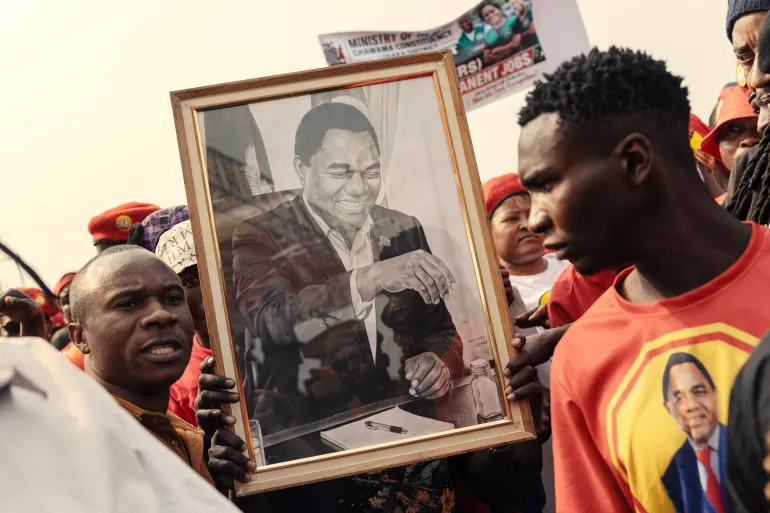
Hichilema’s re-election gives him another five years to pursue the economic programme that formed a central part of his first-term record. Since taking office in 2021, his administration has overseen the restructuring of Zambia’s external debt and worked with international lenders to stabilise the country’s finances. His government has also sought to attract investment into mining and other sectors, with copper remaining particularly important to the country’s economic ambitions. However, economic gains have not eliminated concerns among ordinary citizens. High living costs, unemployment and pressure on household incomes remained important issues during the election campaign. Reuters reported that the opposition was able to use those concerns to challenge the government’s economic record despite improvements in some broader economic indicators.
Hichilema’s second term will therefore be closely watched for whether his administration can translate economic stabilisation and increased investment into broader improvements in household incomes and employment. The 2026 election was held against a backdrop of heightened political tensions. Authorities arrested several opposition figures during the election period, while the opposition raised concerns over alleged intimidation and restrictions. The government said some security operations were necessary to address threats to national security. Despite those disputes, the Electoral Commission has now formally declared Hichilema the winner, giving him a fresh mandate to govern Zambia for another five years.
His victory also means that Zambia’s political leadership will remain under the United Party for National Development (UPND) after its 2021 takeover from the Patriotic Front. For Hichilema, the immediate challenge will be to use his second term to address the economic pressures that remained a major concern during the campaign while maintaining confidence in Zambia’s democratic institutions.