

The National Cohesion and Integration Commission (NCIC) has opened investigations into 10 political leaders and public figures over allegations of hate speech and ethnic incitement, saying the inquiries are part of its constitutional mandate to safeguard national cohesion as political activity intensifies ahead of the 2027 General Election.
The commission announced the investigations following a consultative meeting with the Inter-Religious Council of Kenya (IRCK), emphasizing that no charges have been filed and that the investigations are at a preliminary stage.
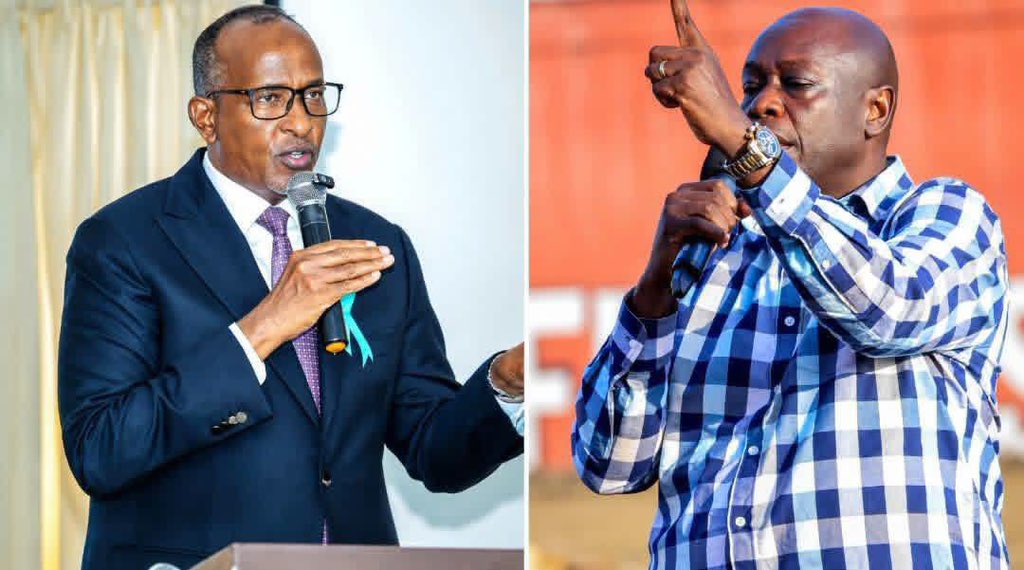
Those under investigation are former Deputy President Rigathi Gachagua, Health Cabinet Secretary Aden Duale, Public Service Cabinet Secretary Geoffrey Ruku, Busia Governor Paul Nyongesa Otuoma, Mandera Deputy Governor Ali Maalim Mohamud, Sirisia MP John Waluke, Kipipiri MP Wanjiku Muhia, David Gikaria, Tipape Naini Musa, and Dr. Dennis Adison Ouma.
According to the commission, the cases are being handled by its Investigations and Compliance Department in accordance with the National Cohesion and Integration Act, 2008, to determine whether statements attributed to the individuals amount to hate speech or ethnic incitement under Kenyan law.
NCIC Chairperson Bishop Dr. Kepha Nyamweya Omae said the commission would conduct the investigations independently and without regard to the political status of those involved.
“The Commission’s mandate to monitor, investigate, and act on matters of hate speech, ethnic incitement, and threats to national cohesion is exercised without political direction, favour, or interference. We are guided solely by the law and the evidence before it,” Omae said.
The chairperson added that the opening of investigations should not be interpreted as a finding of guilt, noting that all those under investigation are entitled to due process.
“No individual, regardless of office or standing, is beyond the reach of the law where credible allegations of hate speech or ethnic incitement arise,” he said.
The commission did not disclose the specific remarks or incidents that prompted the investigations, stating only that the cases are being reviewed under the legal framework governing hate speech and national cohesion.
In a joint statement with the Inter-Religious Council of Kenya, NCIC warned that inflammatory political rhetoric and ethnic profiling could undermine national unity as the country moves closer to the next general election.
“Hate speech is not free speech; it is an assault on human dignity and the constitutional order that binds this nation together,” the joint statement said.
The commission also cautioned political leaders against using language that portrays communities as political adversaries.
“Ethnic contempt, the casting of entire communities as enemies, lesser or as a threat, has never built a nation and never will,” the statement added.
The announcement comes as NCIC steps up monitoring of political rallies, public meetings and online platforms amid increased political activity across the country. The commission has repeatedly said it will investigate and recommend prosecution where evidence shows that public statements violate the National Cohesion and Integration Act.
The investigations do not amount to criminal charges. Should the commission find sufficient evidence, the case files may be forwarded to the Office of the Director of Public Prosecutions (ODPP) for consideration of further legal action.