

NAIROBI — In a monumental stride for East African regional integration, President William Ruto has officially announced that the construction of the highly anticipated Kenya-Uganda Standard Gauge Railway (SGR) link will commence on March 20, 2026.
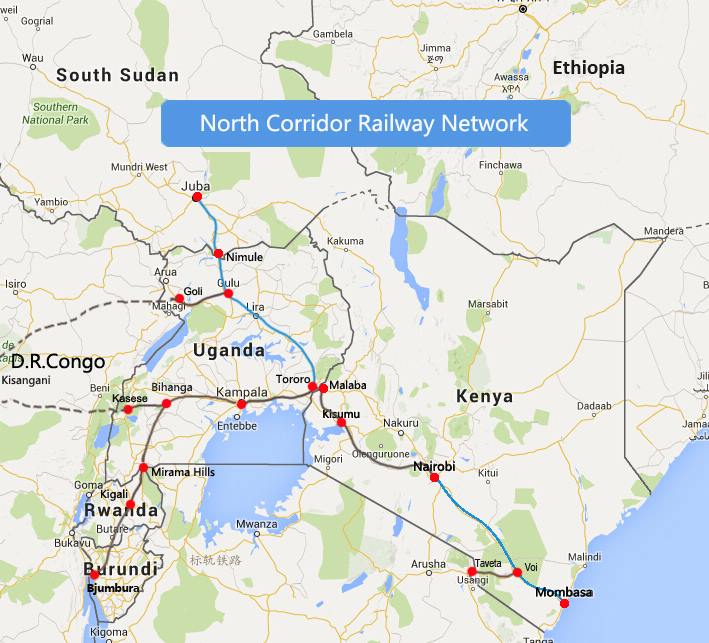
The groundbreaking ceremony, which will be jointly presided over by President Ruto and Ugandan President Yoweri Museveni, is scheduled to take place in Kisumu. This massive infrastructure undertaking aims to bridge the transport gap between the Port of Mombasa and the Ugandan capital, Kampala, closing a critical missing link in the Northern Corridor.
“On the 20th of this month, we will be launching the actual construction of the rail in Kisumu with President Yoweri Museveni,” President Ruto confirmed during the recent Extraordinary Summit of the East African Community (EAC) held in Arusha.
According to the bilateral agreement signed between the two nations, both countries are committed to completing the continuous Nairobi–Kampala railway link by 2028.
The Route and Scope of Expansion
The Kenyan segment of the project involves extending the current SGR line from Naivasha to Malaba at the Ugandan border. This extension is broken down into two main phases: Phase 2B, a 264-kilometer stretch from Naivasha to Kisumu, and Phase 2C, which continues from Kisumu to Malaba.
The Naivasha-Kisumu line will be an engineering feat, featuring 79 railway bridges, eight tunnels spanning over 14 kilometers, and a main terminus in Kisumu West. It will also include an 8.6-kilometer branch line directly linking the railway to the revived Kisumu Port, facilitating seamless cargo movement between rail and Lake Victoria vessels.
A Catalyst for Regional Trade
The economic implications of the completed railway are vast. Currently, the region relies heavily on expensive and time-consuming road freight and the older, slower meter-gauge railway.
President Ruto highlighted the transformative nature of the project, stating, “The project will cut travel time between the two cities from 14 hours to about four hours while reducing freight costs by 35 per cent.”
By synchronizing their infrastructure, Kenya and Uganda aim to create a highly competitive economic bloc. The efficient movement of goods from Mombasa deep into the hinterland—with future expansions targeting Rwanda, South Sudan, and the Democratic Republic of Congo—is expected to cement Kenya’s status as the logistics hub of East Africa.
Financing and Local Preparations
While the multi-billion shilling project represents a massive financial undertaking—estimated at over Sh648 billion ($5.3 billion)—the government is utilizing the railway development levy and actively seeking private-sector operational partnerships, such as ongoing talks with Etihad Rail, to manage the financial footprint.
Locally, preparations are already in high gear. Kisumu Governor Anyang’ Nyong’o recently led a technical team on a site visit to the proposed terminus in Kibos. The immediate priority ahead of the March 20 launch remains the identification and equitable compensation of Project Affected Persons (PAPs) along the corridor, ensuring that local communities directly benefit from the infrastructure boom through jobs, procurement opportunities, and upgraded local amenities.
As the March 20 date approaches, all eyes are on Kisumu for what promises to be a defining moment in East Africa’s economic history.