

The Kenya Universities and Colleges Central Placement Service (KUCCPS) has released the 2026 university and college placement results, enabling thousands of students who sat the 2025 Kenya Certificate of Secondary Education (KCSE) examination to confirm the institutions and courses they have been admitted to ahead of the September intake.
The results were announced by Education Cabinet Secretary Julius Ogamba during the official release of the 2026/27 placement report in Nairobi, marking the completion of the national placement exercise for degree, diploma, teacher training and Technical and Vocational Education and Training (TVET) programmes.
According to KUCCPS, 293,869 applicants have been successfully placed in universities and tertiary institutions across the country. The placements include students admitted to public and private universities, Kenya Medical Training College (KMTC), teacher training colleges and TVET institutions.
The exercise follows applications and course revisions by candidates who completed the 2025 KCSE examination. Of the 993,226 candidates who sat the national examination, 270,700 attained the minimum university entry grade of C+ and above, making them eligible for degree programmes, while the remaining candidates qualified for diploma, certificate and artisan courses offered by TVET institutions and other colleges.
Speaking during the release of the results, Education Cabinet Secretary Julius Ogamba said the placement exercise reflects the government’s commitment to expanding access to higher education while ensuring students are placed fairly based on merit and institutional capacity.
Students can now access their placement results through the KUCCPS Student Portal using their KCSE index number, KCSE year and password. Successful applicants are expected to receive admission letters and reporting instructions from their respective institutions in the coming weeks before the new academic year begins.
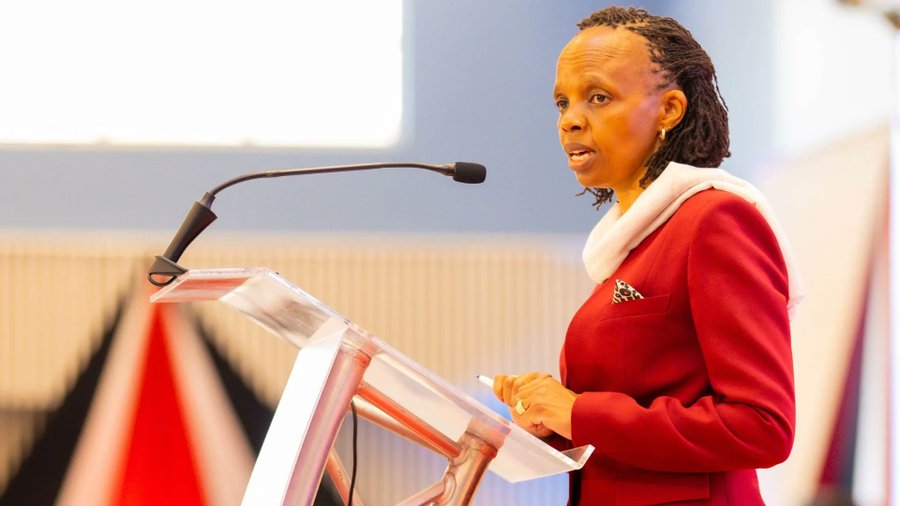
KUCCPS Chief Executive Officer Dr Agnes Mercy Wahome said placement into competitive programmes is guided by a transparent merit-based system that considers applicants’ performance in cluster subjects and available capacity in each institution.
“The students get a cluster weight and then the weight is what is ranked from the first to the last student,” Wahome said while explaining how applicants are selected for highly competitive courses such as Bachelor of Medicine and Bachelor of Surgery (MBChB).
Medicine once again emerged as the most competitive programme in this year’s placement exercise. KUCCPS disclosed that approximately 6,500 applicants sought admission to medical degree programmes, but only 702 slots were available across accredited universities, leaving many qualified candidates unable to secure placement in the course.
The placement agency noted that competition remains high in health sciences, engineering, law and other professional programmes because demand continues to exceed the number of available training spaces.
Candidates who are dissatisfied with their placements will have an opportunity to apply for inter-institutional transfers or placement revisions in accordance with KUCCPS guidelines. The agency said the transfer process is intended to accommodate eligible students whose academic qualifications meet the requirements of their preferred programmes.
The release of the placement results marks the final phase of the national admissions process and clears the way for universities and colleges to begin issuing admission letters, orientation schedules and reporting dates. Students admitted through KUCCPS will also be eligible to apply for government scholarships and Higher Education Loans Board (HELB) funding, subject to the applicable requirements.
The annual placement exercise remains one of the country’s most significant education processes, determining the transition of hundreds of thousands of KCSE candidates into higher learning institutions. By matching applicants with available courses based on academic performance, programme choices and institutional capacity, KUCCPS plays a central role in coordinating access to university and technical education in Kenya.