

President William Ruto has unveiled an ambitious package of reforms aimed at revitalising Kenya’s coffee sector, promising faster payments to farmers, higher producer earnings and increased national production as the government rolls out a nationwide Coffee Revival Programme.
Speaking during the launch of the programme in Kianyaga, Kirinyaga County, the President announced that coffee farmers will now be paid within five days of delivering their produce, a move intended to address one of the sector’s longest-standing challenges. Delayed payments have always affected farmers’ incomes and cash flow.
Ruto said timely payment should become a standard practice across the coffee value chain, arguing that farmers deserve prompt compensation for their produce to enable them to reinvest in their farms and improve productivity.
Alongside the payment reforms, the President outlined a broader strategy to increase farmers’ earnings through ongoing sector reforms. He said the government aims to raise average returns from the current levels of about Sh158 per kilogramme to between Sh250 and Sh300 per kilogramme by improving efficiency, reducing unnecessary costs within the value chain and strengthening market access.
The government also pledged that at least 80 per cent of proceeds from every coffee sale will go directly to farmers, with the remaining 20 per cent catering for milling, marketing and other services within the coffee value chain. According to Ruto, the reforms are intended to ensure producers receive a larger share of the value generated from their coffee.
At the centre of the revival programme is the nationwide distribution of 20 million certified, disease-resistant coffee seedlings through the New Kenya Planters Cooperative Union (New KPCU). The initiative seeks to replace ageing coffee trees, expand coffee farming into suitable regions and improve productivity through higher-yielding varieties.
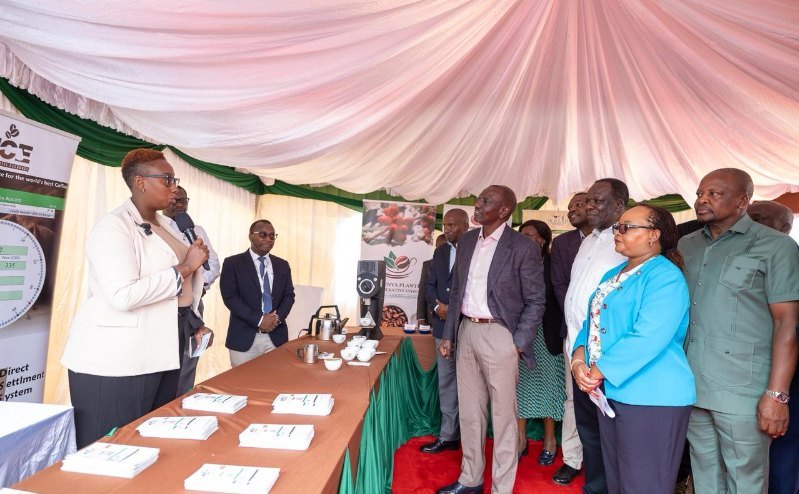
The government is targeting an increase in Kenya’s annual coffee production from approximately 50,000 metric tonnes to 150,000 metric tonnes over the next few years. It also aims to raise average yields per coffee tree through improved planting materials, modern farming practices and expanded agricultural extension services.
President Ruto said the reforms go beyond increasing production and are designed to restore confidence in the coffee sector after years of declining output, governance challenges within some cooperative societies, delayed farmer payments and rising production costs.
To further strengthen the industry, the government announced plans to support struggling coffee factories, address debts affecting cooperative societies and introduce measures aimed at protecting farmers from fluctuations in global coffee prices.
The President also reaffirmed the government’s commitment to increasing local value addition by encouraging more coffee roasting, processing, packaging and branding within Kenya rather than exporting raw coffee beans. He said expanding domestic processing would enable the country to earn more from its coffee exports while creating additional employment opportunities across the value chain.
The launch attracted several senior government leaders, including Deputy President Kithure Kindiki, Agriculture Cabinet Secretary Mutahi Kagwe, Cooperatives and Micro, Small and Medium Enterprises Development Cabinet Secretary Wycliffe Oparanya, Kirinyaga Governor Anne Waiguru and other national and county leaders drawn from coffee-growing regions
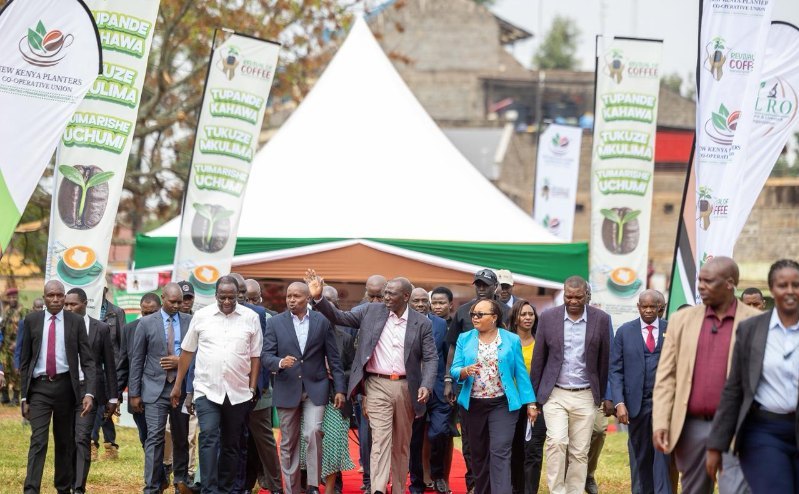
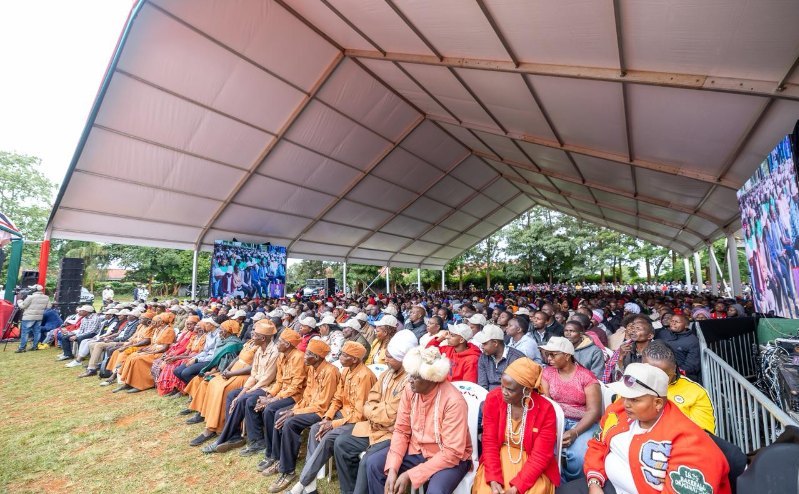
Speaking during the event, government leaders described the revival programme as part of broader reforms aimed at restoring Kenya’s position as one of the world’s leading producers of premium Arabica coffee while improving the livelihoods of hundreds of thousands of farming households that depend on the crop.
Kirinyaga County was selected to host the national launch because it remains one of Kenya’s leading coffee-producing regions, with thousands of smallholder farmers relying on coffee as their primary source of income. The county has consistently produced high-quality coffee that commands premium prices in international markets, making it a fitting location for the launch of the nationwide initiative.
The Coffee Revival Programme builds on recent legislative and institutional reforms within the sector, including changes to coffee marketing, cooperative management and governance aimed at improving transparency and ensuring farmers receive better returns from their produce.
For years, coffee farmers have cited delayed payments, ageing coffee bushes, limited access to certified seedlings, governance challenges within cooperative societies and rising production costs as some of the major obstacles affecting the profitability of the sector. These challenges have contributed to declining production despite sustained global demand for Kenyan coffee.
The government says the latest reforms are intended to reverse that trend by combining policy changes, increased investment, improved planting materials and stronger institutional support to create a more productive and competitive coffee industry.
If successfully implemented, the programme is expected to transform Kenya’s coffee value chain by improving farmer incomes, increasing production and strengthening the country’s position in international coffee markets while ensuring growers receive a larger share of the value generated from one of the country’s most important export crops.