

The United Nations has allocated more than KSh259 million to boost Kenya’s readiness to respond to the Ebola virus, after two people have died from the disease. The money will go towards government efforts to tackle the disease through the Kenya Humanitarian Fund, managed by the United Nations’ Office for the Coordination of Humanitarian Affairs (OCHA).
“The funding will boost disease surveillance, training and infection prevention supplies,” OCHA said in a statement issued on Tuesday, October 27. “Over $2 million has been allocated from the Kenya Humanitarian Fund (managed by OCHA) to boost Ebola preparedness and response.”
The money will be used to increase public awareness to raise community awareness of potential symptoms, how to prevent the disease and when to seek medical help. This includes boosting surveillance at border crossings and high-risk routes such as those linking the Kakuma refugee complex in north-western Kenya.
It will also be used to train rapid response teams and frontline workers. Infection prevention and control kits will also be provided to reduce risk to staff. This will help speed up identification of the disease, quicken responses to suspected cases and improve coordination between health authorities and humanitarian organisations.
Kenya confirmed its first imported case of Bundibugyo virus disease in October, after a Kenyan national living in the Democratic Republic of the Congo travelled through Uganda and arrived in Nairobi.
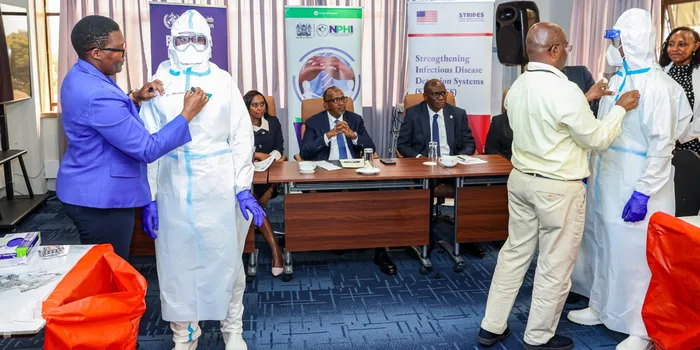
As of October 26, there had been nine confirmed cases of the disease. Of these, two people had died. The remaining seven were reported to be stable and receiving treatment. Health authorities have stepped up contact tracing, lab testing and monitoring of those who have been in contact with confirmed cases.
On October 26, the Ministry of Health said the first 20 contacts had completed their 21 day monitoring period and had no symptoms of the disease. They had now been released to return home.
“The twenty contacts have been released as they meet the release criteria,” said Patrick Amoth, Director-General for Health. “The twenty contacts have been reviewed and found to meet the release criteria. They have had no symptoms for 21 days since last exposure.”
There are currently 98 contacts still being monitored.
The funding provided by the United Nations will help boost Kenya’s efforts to identify infections early, protect frontline workers and stop the disease spreading. The country is relying on surveillance, quarantining confirmed cases, contact tracing and public awareness to tackle the outbreak.
The new funding will help boost these efforts, especially in areas of high travel. However, the success of the funding will depend on how quickly it can be delivered to the teams.