

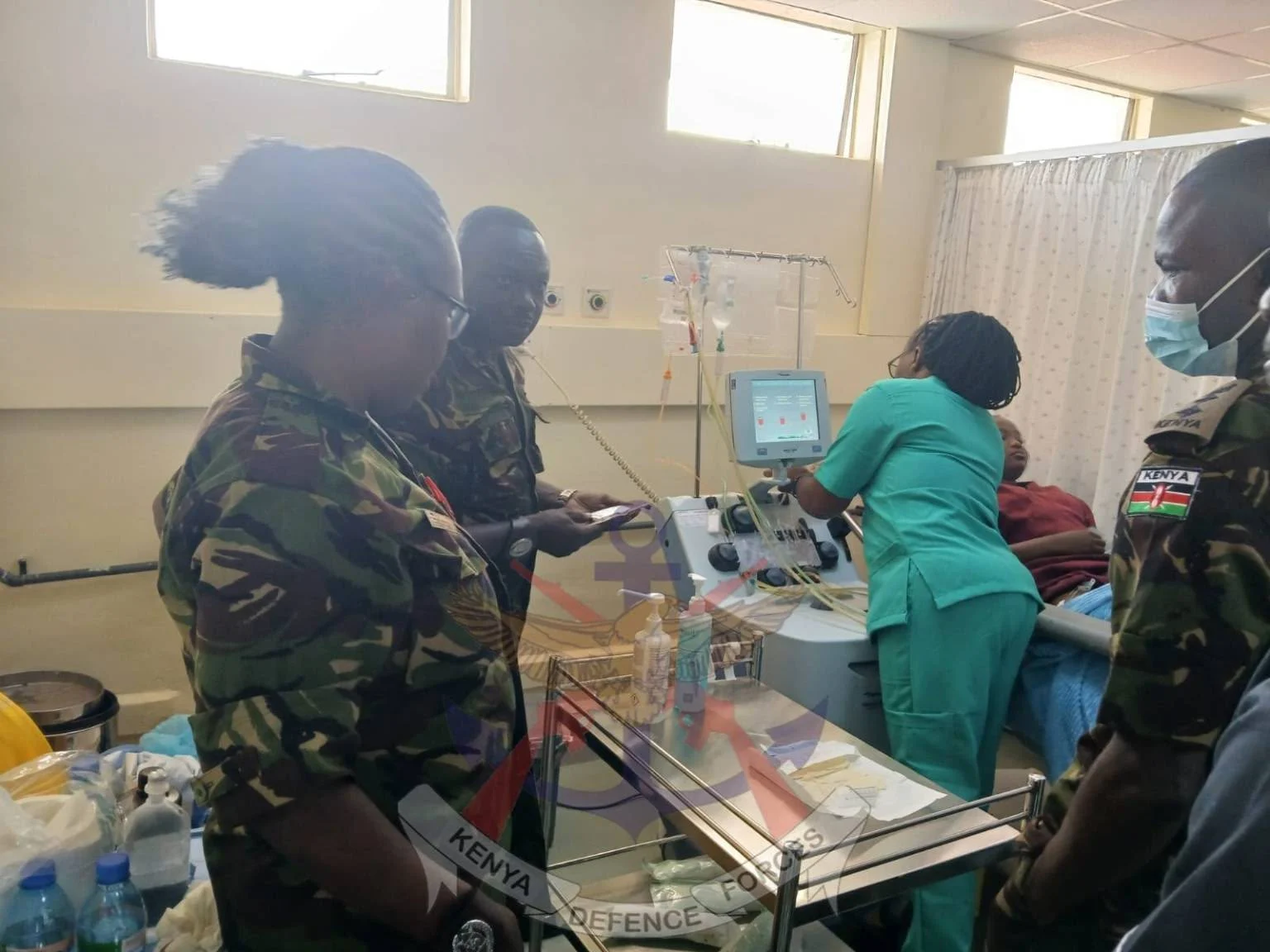
The Defence Forces Memorial Hospital (DFMH) has completed its first-ever red blood cell exchange procedure, using a new Spectra Optia apheresis system to treat a 15-year-old girl with sickle cell disease.
The procedure was conducted at the DFMH Renal Unit on Friday, October 2, 2026, and marked the first time the hospital has performed the specialized blood treatment, according to Kenya Defence Forces (KDF). KDF added that the procedure enhances the DFMH’s capacity to treat a range of complicated blood disorders.
Red blood cell exchange is apheresis that involves removing sickled red blood cells from circulation and replacing them with healthy donor cells.
The procedure helps reduce the percentage of sickled red blood cells in the body and is used in the management of sickle cell disease. The difference between a regular blood transfusion and an exchange procedure is that the latter selectively removes red blood cells from the blood and reintroduces them into the bloodstream after removal. The Spectra Optia system enables clinicians to separate blood components during an exchange procedure, allowing them to remove undesirable elements while saving usable ones.
KDF said the new procedure would allow DFMH to cater for life-saving treatments that may be necessary for qualified patients, citing that the process involves a significant increase in the capacity to provide specialized care.
“The availability of this unique capability at DFMH marks not only a significant milestone in the delivery of highly specialized services, but also a step forward in our institutional readiness to take on more of these complicated procedures,” KDF said.
The Force noted that, in addition to the immediate clinical benefits of the new service, the Spectra Optia system also allows for the potential future introduction of additional therapeutic apheresis procedures at DFMH, as well as the enhancement of the hospital’s advanced transfusion services.
The new service will offer a vital treatment option for KDF employees, their dependents, and other eligible beneficiaries.
It is not necessary for every individual who has sickle cell disease to have a red blood cell exchange. The procedure is typically recommended for individuals who have particular health conditions that are deemed to be more responsive to this type of treatment. There are several different health conditions that can be present in individuals with sickle cell disease, and a specific treatment called an exchange transfusion may be recommended for certain conditions.
The addition of red blood cell exchange at DFMH marks the newest facility in Kenya to offer the automated procedure, as Jaramogi Oginga Odinga Teaching and Referral Hospital in Kisumu also provides the same service using the Spectra Optia system.
The DFMH milestone underscores the hospital’s growing reputation as a referral facility for advanced blood component procedures and will further enhance the hospital’s ability to provide such care to KDF beneficiaries in the future, KDF said.