

Kenya’s tea export earnings rose to Ksh186.9 billion in 2025, up from KSh181.6 billion in 2024 and KSh136.5 billion in 2021, according to Tea Board of Kenya (TBK) data. The increase came despite a decline in tea production, which fell from 598 million kilogrammes in 2024 to about 550 million kilogrammes in 2025. TBK Chief Executive Officer Willy Mutai said the figures reflected the impact of government interventions in the tea sector over the past four years, including support for farmers, factory modernisation and efforts to improve market access.
“Total tea production increased from 537 million kilogrammes in 2021 to 598 and 550 million in 2024 and 2025, respectively,” Mutai said. “Export earnings increased from Sh136.5 billion in 2021 to Sh181.6 and Sh186.9 billion in 2024 and 2025 respectively.”
The average amount paid to farmers for green leaf increased from Ksh35 per kilogramme in 2021 to Ksh64 in 2024, before falling to Ksh56 per kilogramme in 2025. This means the 2025 average remained substantially above the 2021 level but was KSh8 lower than the previous year’s average. The decline has kept farmer returns at the centre of discussions about the effectiveness of reforms in the sector. The government has set a target of raising average green-leaf payments to at least Ksh100 per kilogramme, with TBK linking the target to improved tea quality, lower production costs, greater value addition and more competitive marketing channels.
While production declined in 2025, tea export volumes increased. TBK data show that Kenya exported 652.8 million kilogrammes of tea during the year, up from about 594.5 million kilogrammes in 2024. The increase was partly attributed to stocks carried over from previous years. The Tea Board’s figures also show that Kenya’s tea reached 100 export destinations, compared with 96 previously, reflecting efforts to expand beyond traditional markets. The increase in export earnings therefore did not result solely from higher production. Export volumes, existing stocks and market conditions also contributed to the overall value recorded in 2025.
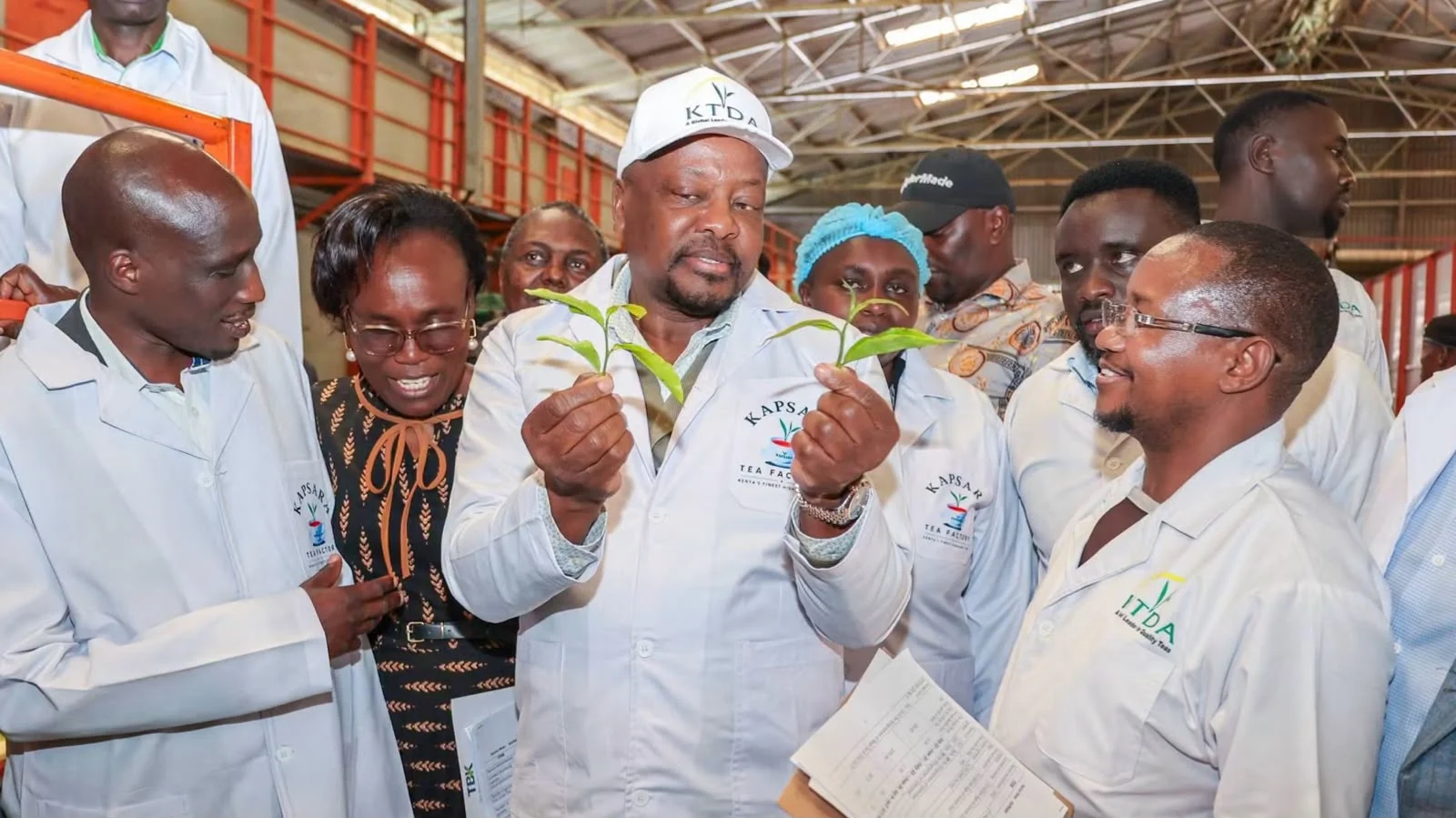
The government has invested Ksh850 million in machinery and equipment for 17 smallholder tea factories, while more than 650,000 smallholder farmers have received about 290,000 tonnes of subsidised fertiliser since 2022, according to figures presented by the government. Other measures include tax changes intended to support tea value addition and a KSh100 million government grant to Kenya Tea Packers for a common-user facility. Agriculture Cabinet Secretary Mutahi Kagwe said the reforms were intended to make the industry more competitive while improving returns to farmers.
“Tea is the backbone of many rural economies in Kenya. Hundreds of thousands of households depend directly or indirectly on tea for their livelihoods,” Kagwe said.
Kagwe said the government was also pursuing new export markets while maintaining Kenya’s established markets, including Pakistan, Egypt, the United Kingdom, Sudan, Afghanistan and the United Arab Emirates.
The latest figures present a mixed picture for the sector. Export earnings increased from KSh181.6 billion to KSh186.9 billion, while production dropped by about 48 million kilogrammes and average green-leaf payments declined from KSh64 to KSh56 per kilogramme. The difference means stronger national export earnings have not translated into a higher average green-leaf price for farmers compared with 2024. Tea farmers and industry stakeholders are therefore expected to continue focusing on whether reforms can reduce production costs, improve factory efficiency, expand value addition and ultimately increase the amount growers receive for their produce. The government’s KSh100-per-kilogramme target will provide another measure of whether those interventions translate into higher returns at farm level.