

Police fired tear gas in Nairobi’s Central Business District on Friday, August 28, as small-scale traders protested against the Kenya Revenue Authority’s (KRA) revised customs benchmark for consolidated cargo. The demonstrations disrupted business in parts of the city centre, with traders and members of the public seen fleeing after police officers deployed tear-gas canisters. Hundreds of businesses in central Nairobi reportedly closed during the protests. The demonstrations followed opposition from traders in major commercial centres, including Kamukunji, Gikomba and Nyamakima, who have raised concerns over the effect of the revised customs valuation on the cost of importing goods.
The traders were protesting under the “Businesses Under Siege” campaign and had called for a review of the new benchmark. The Kenya Revenue Authority increased the Customs Minimum Benchmark for general containerised consolidation cargo from Sh2.5 million to Sh3.2 million for a 40-foot container. The change, which took effect on August 20, represents an increase of Sh700,000, or about 28 per cent. KRA says the adjustment is intended to address cases of undervaluation and under-declaration of imported goods and improve compliance with customs requirements. The authority has also argued that the measure will help create a more level trading environment for businesses that declare their imports correctly.
The revised benchmark applies to general containerised consolidation cargo, a system commonly used by smaller importers who combine their goods in one container.
KRA has clarified that the Sh3.2 million figure is not a fixed tax payable on every container. Instead, it serves as a minimum reference point under the simplified customs clearance arrangement for consolidated cargo. Where the actual value of goods in a shipment is higher than the benchmark, importers are required to declare the actual value and pay the applicable duties and taxes. The final tax liability therefore depends on factors such as the type and classification of goods, their declared value and other applicable customs requirements. This distinction has become central to the dispute because some traders have interpreted the revised figure as a direct tax charge of Sh3.2 million on each consolidated container.
Traders opposing the change argue that the higher benchmark will increase the cost of clearing imported merchandise and place additional pressure on businesses that rely on consolidated shipments. They have warned that increased import costs could affect profit margins and, in turn, lead to higher prices for consumers.
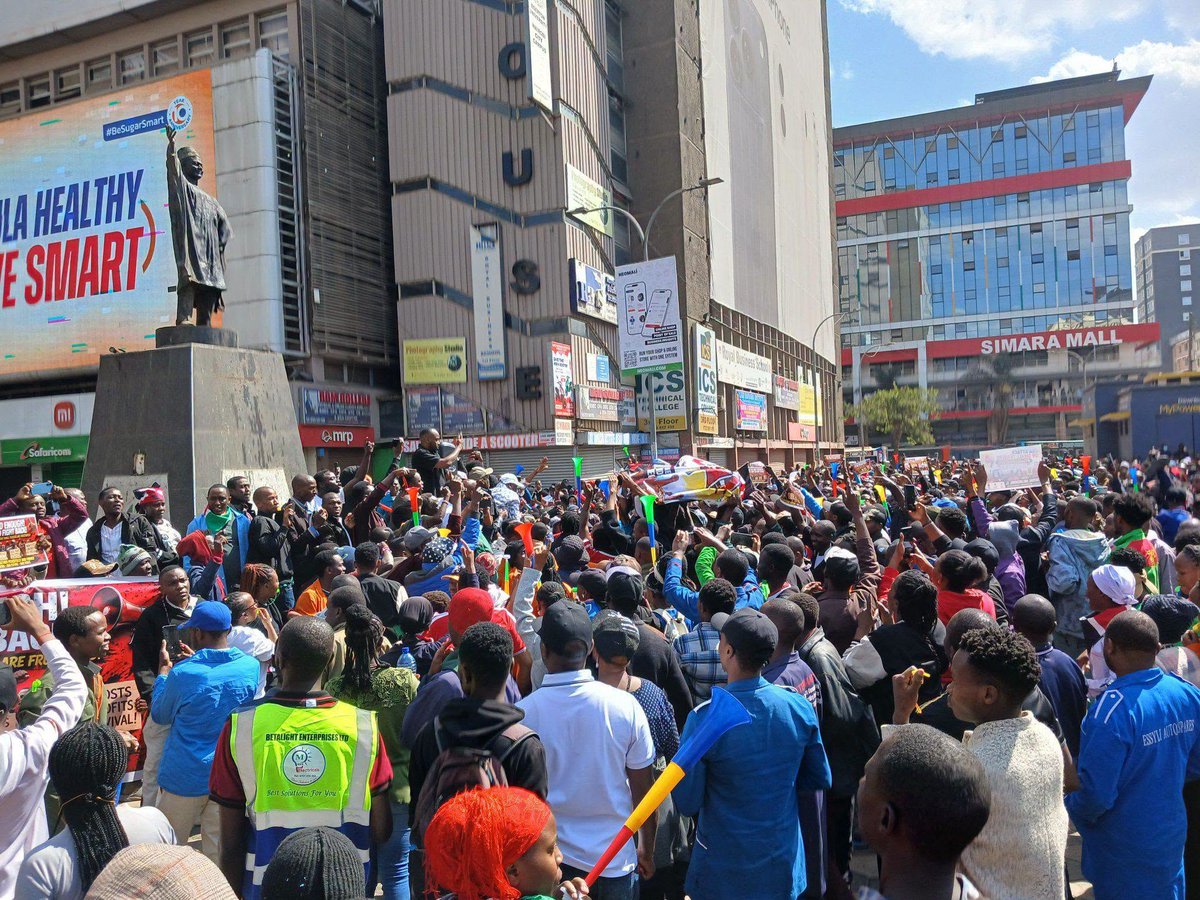
The protests followed earlier calls by traders for a nationwide business shutdown over the new customs benchmark. Traders from Kamukunji, Gikomba and Nyamakima had announced plans to close their businesses and demonstrate against the change. The demonstrations in Nairobi brought renewed attention to the tension between KRA’s efforts to strengthen customs compliance and the concerns of small-scale importers over the cost of doing business.
As of Friday, the revised Sh3.2 million minimum benchmark remained in effect. KRA has maintained that it is a customs reference value rather than a blanket tax, while affected traders continue to demand a review of the policy. Police had not, by the time of reporting, issued a detailed public explanation for the use of tear gas during Friday’s demonstrations.