Agriculture and Livestock Development Cabinet Secretary Mutahi Kagwe has directed tea factories across Kenya to reject green leaf that fails to meet the recommended “two leaves and a bud” standard, warning that poor-quality produce is lowering the value of Kenyan tea and affecting farmers’ earnings.
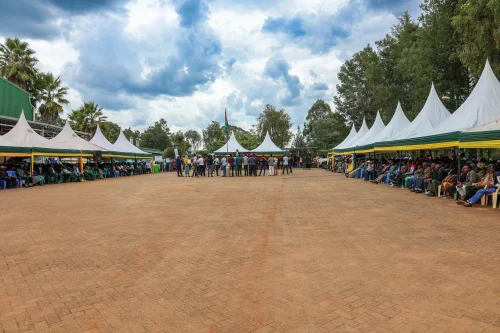
Kagwe issued the directive during a visit to Kapsara Tea Factory in Trans Nzoia County, where he also handed over Sh44.6 million for the installation of a new withering plant as part of the government’s wider Sh7.1 billion programme to modernise tea factories.
The CS said investment in modern processing equipment would have limited impact if factories continued accepting and processing substandard green leaf.
“If we have agreed that quality tea is two leaves and a bud, then that is what must come to the factory,” Kagwe said, arguing that farmers who follow recommended plucking practices should not lose value because their produce is mixed with poor-quality leaf.
The new directive places greater responsibility on tea factories to assess green leaf before it enters the processing chain. Kagwe warned that mixing good-quality leaf with inferior produce can lower the quality of the final tea, affecting the price the product commands in the market and, ultimately, the returns received by growers.
The recommended “two leaves and a bud” refers to the tender leaves and bud normally preferred for quality tea production. The government wants factories to apply the standard consistently instead of accepting different grades of leaf and processing them together.
Kagwe said the intention was not to punish farmers but to establish a stronger quality culture across the tea industry. For farmers, however, stricter enforcement could mean that leaf failing to meet the required standard is turned away at buying centres or factories. This makes farmer training and extension services important to the implementation of the directive, particularly for growers who may need to adjust their plucking practices.
The government has said farmer training and extension support will continue alongside the quality drive.
At Kapsara Tea Factory, Kagwe handed over Sh44.6 million for the installation of a new withering plant. The equipment is intended to replace ageing machinery that consumes significant amounts of electricity. The investment forms part of the government’s broader effort to modernise tea-processing facilities, reduce production costs and improve energy efficiency.
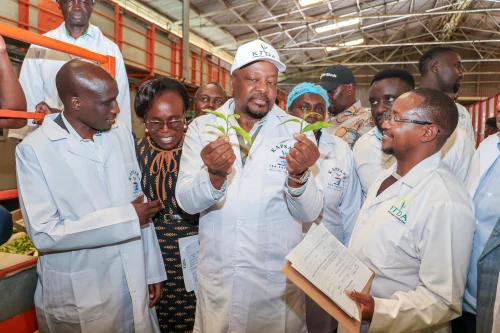
Withering is one of the early stages of tea processing. Freshly harvested tea leaves are allowed to lose moisture before undergoing subsequent processing stages. Improving equipment at this stage can therefore affect the efficiency of the factory’s wider processing operation.
Kagwe has also directed Kapsara management to ensure that the funds are used strictly for their intended purpose. The investment is part of the Sh7.1 billion tea factory modernisation programme, which targets ageing machinery across the sector. According to the government, the programme is expected to improve energy efficiency, reduce processing expenses and strengthen factories’ capacity to produce higher-value tea products.
The factory upgrades are also linked to a broader attempt to change how Kenya earns from its tea. Kenya has traditionally relied heavily on bulk tea exports. The government now wants factories to increase production of orthodox, speciality and value-added teas, which can access different market segments from conventional bulk tea.
Kagwe said Kenya needs to maintain its traditional export markets while also pursuing new buyers as the country expands production of higher-value tea products. The strategy is based on improving the product before it reaches international markets rather than relying only on increased production volumes.
For the government, the objective is to link better green-leaf quality with improved factory efficiency and greater value addition, with the eventual measure being how much money reaches tea growers.
During the visit, Kagwe also defended the government’s tea levy amid criticism from some political leaders. He said the levy is paid by buyers rather than farmers or tea factories and argued that revenue collected should support areas including price stabilisation, tea research, infrastructure, marketing, quality improvement, value addition and market development. The government sees these measures as part of a broader effort to strengthen the tea industry, rather than relying solely on auction prices or increasing production.
For Kenyan tea farmers, the outcome will ultimately depend on whether the government’s quality requirements are consistently enforced and whether improvements made at factories and in international marketing result in a measurable increase in the value paid for their produce.