

The United States has moved to block maritime traffic linked to Iran through the strategic Strait of Hormuz, escalating tensions and raising fears of economic disruption and renewed conflict in the Middle East.
The decision follows failed negotiations between Washington and Tehran, with U.S. President Donald Trump ordering the measures as part of a broader effort to pressure Iran. The blockade, which took effect on Monday, targets vessels entering and leaving Iranian ports, a move analysts say could have far-reaching consequences for global energy markets.
WHAT IS THE STRAIT OF HORMUZ?
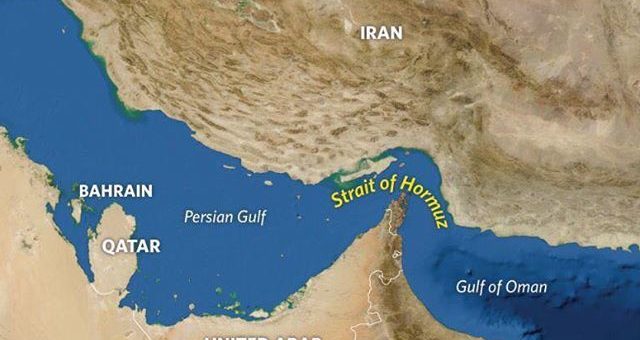
The Strait of Hormuz is a narrow but critically important sea passage located between Iran to the north and Oman and the United Arab Emirates to the south.
It connects the oil-rich Persian Gulf to the open ocean through the Gulf of Oman and the Arabian Sea, making it the primary route through which crude oil from major producers such as Saudi Arabia, Iraq, Kuwait, and the UAE reaches global markets.
Despite being only about 33 kilometers wide at its narrowest point, it handles a significant portion of the world’s oil shipments each day. This makes it one of the most strategically sensitive chokepoints in global trade. Any disruption whether through conflict or blockade can immediately affect oil supply, pushing up fuel prices and impacting economies around the world.
“IMPULSIVE MOVE”
U.S. Central Command said the operation would apply to “all maritime traffic entering and exiting Iranian ports,” including those along the Arabian Gulf and the Gulf of Oman, and would be enforced across vessels of all nations.
Speaking after the measures came into force, Trump warned that U.S. forces would “eliminate” any Iranian vessel approaching the restricted zone, underlining the seriousness of the escalation.
The move has drawn sharp criticism, with observers warning it risks worsening an already volatile situation involving the United States, Iran, and Israel. Iranian-linked media described the blockade as “a reckless move that risks choking the global economy,” arguing that the consequences could ultimately rebound on American consumers through rising fuel costs and inflation.
Beyond the rhetoric, the action places a spotlight on the Strait of Hormuz itselfa narrow but critical passage through which a large share of the world’s oil supply flows. Any disruption in this corridor immediately affects global markets, making it one of the most strategically sensitive نقاط in international trade.
THE BLOCKADE
Despite the strong language from Washington, experts question whether a full and lasting blockade is realistic.
Analysts say the United States is more likely to rely on increased naval patrols, surveillance, and selective restrictions rather than a complete shutdown of the waterway. The complexity of maritime traffic in the region, combined with the number of countries that depend on the route, makes total enforcement extremely difficult.
“Iran does not need to engage the U.S. fleet directly to undermine the blockade,” one regional expert noted, pointing to Tehran’s ability to deploy fast-attack boats, naval mines, and coastal missile systems. “Such tools can quickly turn any blockade into a prolonged war of attrition.”
Others warn that even if temporary control is achieved, maintaining it over time would come at significant military, political, and economic cost, raising doubts about the long-term viability of the strategy.
GREAT IMPACT
Even a partial disruption in the Strait of Hormuz is enough to send shockwaves through the global economy.
Oil prices, already elevated amid ongoing tensions, could climb further if the situation deteriorates. Analysts have warned that prices could surge dramatically under sustained restrictions, adding pressure to economies worldwide.
The impact would not be limited to the Middle East. Countries across Africa, Europe, and Asia many heavily reliant on imported fuel,could face rising costs of transport, food, and essential goods. This, in turn, could fuel inflation and slow economic growth.
Experts also caution that the blockade increases the risk of a broader conflict. With Iran signaling it has additional military capabilities it has yet to deploy, the possibility of escalation remains high if tensions continue to rise.
As the situation unfolds, the focus remains on the Strait of Hormuz a narrow stretch of water whose stability is crucial not just for regional security, but for the functioning of the global economy.